FAA-H-8083-25C · Source PDF page 121
Aerodynamics of Flight
Aerodynamic Forces in Flight Maneuvers · PHAK page 5-24
Searchable transcription
Normal turn Slipping turn Skidding turn
Centrifugal Centrifugal Centrifugal force
force equals force less than greater than
horizontal lift horizontal lift horizontal lift
5-24
Vertical
lift
Vertical
lift
Vertical
lift
L L L
ift ift ift
Centrifugal
force Centrifugal Centrifugal force
force
Horizontal Horizontal Horizontal
lift lift lift
L
o
a L d
o a
d
Load
Weight Weight Weight
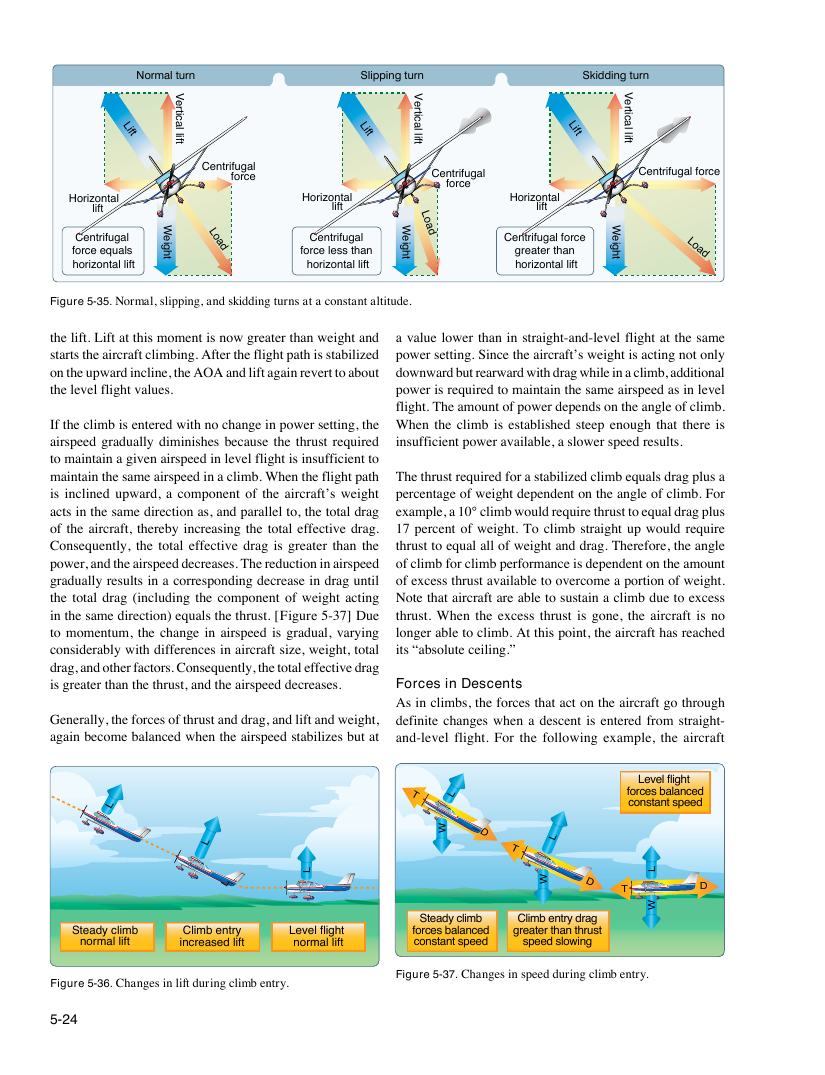
Figure 5-35. Normal, slipping, and skidding turns at a constant altitude.
the lift. Lift at this moment is now greater than weight and a value lower than in straight-and-level flight at the same
starts the aircraft climbing. After the flight path is stabilized power setting. Since the aircraft’s weight is acting not only
on the upward incline, the AOA and lift again revert to about downward but rearward with drag while in a climb, additional
the level flight values. power is required to maintain the same airspeed as in level
flight. The amount of power depends on the angle of climb.
If the climb is entered with no change in power setting, the When the climb is established steep enough that there is
airspeed gradually diminishes because the thrust required insufficient power available, a slower speed results.
to maintain a given airspeed in level flight is insufficient to
maintain the same airspeed in a climb. When the flight path The thrust required for a stabilized climb equals drag plus a
is inclined upward, a component of the aircraft’s weight percentage of weight dependent on the angle of climb. For
acts in the same direction as, and parallel to, the total drag example, a 10° climb would require thrust to equal drag plus
of the aircraft, thereby increasing the total effective drag. 17 percent of weight. To climb straight up would require
Consequently, the total effective drag is greater than the thrust to equal all of weight and drag. Therefore, the angle
power, and the airspeed decreases. The reduction in airspeed of climb for climb performance is dependent on the amount
gradually results in a corresponding decrease in drag until of excess thrust available to overcome a portion of weight.
the total drag (including the component of weight acting Note that aircraft are able to sustain a climb due to excess
in the same direction) equals the thrust. [Figure 5-37] Due thrust. When the excess thrust is gone, the aircraft is no
to momentum, the change in airspeed is gradual, varying longer able to climb. At this point, the aircraft has reached
considerably with differences in aircraft size, weight, total its “absolute ceiling.”
drag, and other factors. Consequently, the total effective drag
is greater than the thrust, and the airspeed decreases. Forces in Descents
As in climbs, the forces that act on the aircraft go through
Generally, the forces of thrust and drag, and lift and weight, definite changes when a descent is entered from straight-
again become balanced when the airspeed stabilizes but at and-level flight. For the following example, the aircraft
Level flight
T L forces balanced
L constant speed
W D
L
L
T
L L
L W D T D
W
Steady climb Climb entry drag
Steady climb Climb entry Level flight forces balanced greater than thrust
normal lift increased lift normal lift constant speed speed slowing
Figure 5-37. Changes in speed during climb entry.
Figure 5-36. Changes in lift during climb entry.