FAA-H-8083-25C · Source PDF page 177
Aircraft Systems
Engine Cooling Systems · PHAK page 7-17
Searchable transcription
The oil temperature gauge measures the temperature of oil. Air cooling is accomplished by air flowing into the engine
A green area shows the normal operating range, and the red compartment through openings in front of the engine
line indicates the maximum allowable temperature. Unlike cowling. Baffles route this air over fins attached to the engine
oil pressure, changes in oil temperature occur more slowly. cylinders, and other parts of the engine, where the air absorbs
This is particularly noticeable after starting a cold engine, the engine heat. Expulsion of the hot air takes place through
when it may take several minutes or longer for the gauge to one or more openings in the lower, aft portion of the engine
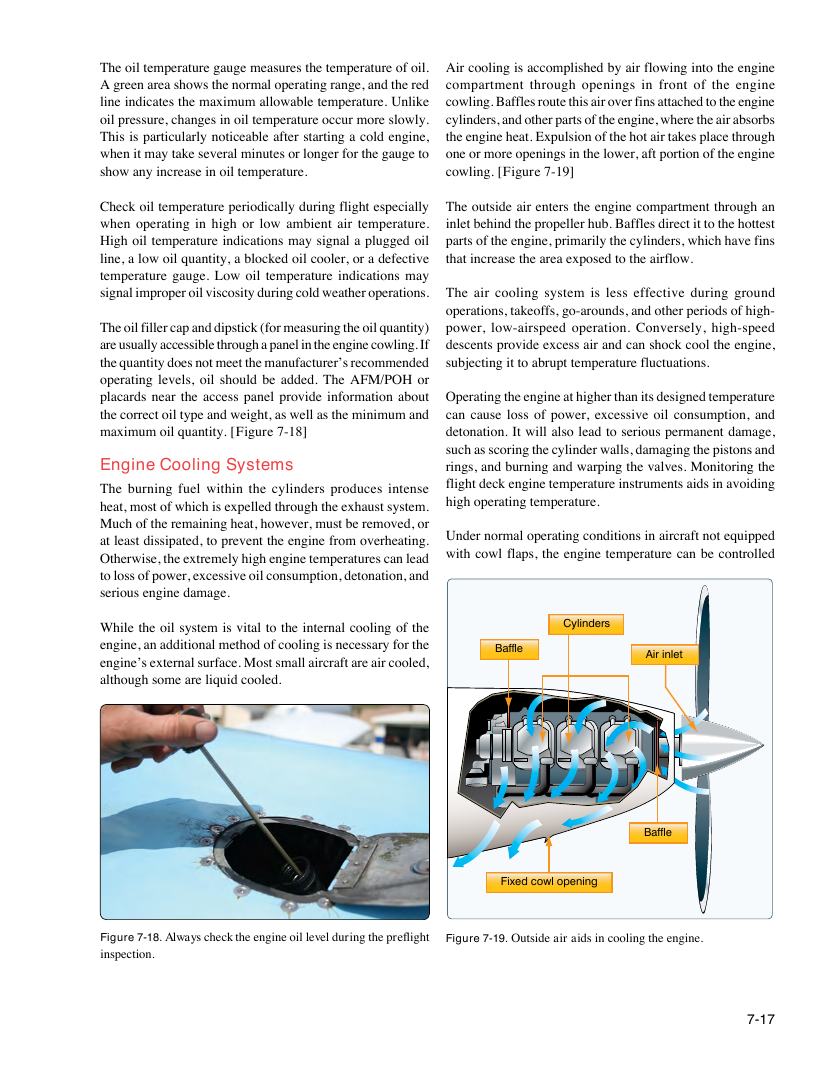
show any increase in oil temperature. cowling. [Figure 7-19]
Check oil temperature periodically during flight especially The outside air enters the engine compartment through an
when operating in high or low ambient air temperature. inlet behind the propeller hub. Baffles direct it to the hottest
High oil temperature indications may signal a plugged oil parts of the engine, primarily the cylinders, which have fins
line, a low oil quantity, a blocked oil cooler, or a defective that increase the area exposed to the airflow.
temperature gauge. Low oil temperature indications may
signal improper oil viscosity during cold weather operations. The air cooling system is less effective during ground
operations, takeoffs, go-arounds, and other periods of high-
The oil filler cap and dipstick (for measuring the oil quantity) power, low-airspeed operation. Conversely, high-speed
are usually accessible through a panel in the engine cowling. If descents provide excess air and can shock cool the engine,
the quantity does not meet the manufacturer’s recommended subjecting it to abrupt temperature fluctuations.
operating levels, oil should be added. The AFM/POH or
placards near the access panel provide information about Operating the engine at higher than its designed temperature
the correct oil type and weight, as well as the minimum and can cause loss of power, excessive oil consumption, and
maximum oil quantity. [Figure 7-18] detonation. It will also lead to serious permanent damage,
such as scoring the cylinder walls, damaging the pistons and
Engine Cooling Systems rings, and burning and warping the valves. Monitoring the
flight deck engine temperature instruments aids in avoiding
The burning fuel within the cylinders produces intense
high operating temperature.
heat, most of which is expelled through the exhaust system.
Much of the remaining heat, however, must be removed, or
Under normal operating conditions in aircraft not equipped
at least dissipated, to prevent the engine from overheating.
with cowl flaps, the engine temperature can be controlled
Otherwise, the extremely high engine temperatures can lead
to loss of power, excessive oil consumption, detonation, and
serious engine damage.
While the oil system is vital to the internal cooling of the Cylinders
engine, an additional method of cooling is necessary for the
Baffle
Air inlet
engine’s external surface. Most small aircraft are air cooled,
although some are liquid cooled.
Baffle
Fixed cowl opening
Figure 7-18. Always check the engine oil level during the preflight Figure 7-19. Outside air aids in cooling the engine.
inspection.
7-17