FAA-H-8083-25C · Source PDF page 198
Aircraft Systems
Oxygen Systems · PHAK page 7-38
Searchable transcription
Oxygen Masks oxygen system. However, current regulations require aircraft
There are numerous types and designs of oxygen masks in with oxygen systems installed and certified for operations
use. The most important factor in oxygen mask use is to above 18,000 feet to be equipped with oxygen masks instead
ensure that the masks and oxygen system are compatible. of cannulas. Many cannulas have a flow meter in the oxygen
Crew masks are fitted to the user’s face with a minimum of supply line. If equipped, a periodic check of the green flow
leakage and usually contain a microphone. Most masks are detector should be a part of the pilot’s regular scan.
the oronasal type that covers only the mouth and nose.
Diluter-Demand Oxygen Systems
A passenger mask may be a simple, cup-shaped rubber Diluter-demand oxygen systems supply oxygen only when
molding sufficiently flexible to obviate individual fitting. It the user inhales through the mask. An automix lever allows
may have a simple elastic head strap or the passenger may the regulators to automatically mix cabin air and oxygen or
hold it to his or her face. supply 100 percent oxygen, depending on the altitude. The
demand mask provides a tight seal over the face to prevent
All oxygen masks should be kept clean to reduce the danger dilution with outside air and can be used safely up to 40,000
of infection and prolong the life of the mask. To clean the feet. A pilot who has a beard or mustache should be sure it is
mask, wash it with a mild soap and water solution and rinse trimmed in a manner that will not interfere with the sealing
it with clear water. If a microphone is installed, use a clean of the oxygen mask. The fit of the mask around the beard or
swab, instead of running water, to wipe off the soapy solution. mustache should be checked on the ground for proper sealing.
The mask should also be disinfected. A gauze pad that has
been soaked in a water solution of Merthiolate can be used Pressure-Demand Oxygen Systems
to swab out the mask. This solution used should contain Pressure-demand oxygen systems are similar to diluter
one-fifth teaspoon of Merthiolate per quart of water. Wipe demand oxygen equipment, except that oxygen is supplied to
the mask with a clean cloth and air dry. the mask under pressure at cabin altitudes above 34,000 feet.
Pressure-demand regulators create airtight and oxygen-tight
Cannula seals, but they also provide a positive pressure application of
A cannula is an ergonomic piece of plastic tubing that runs oxygen to the mask face piece that allows the user’s lungs
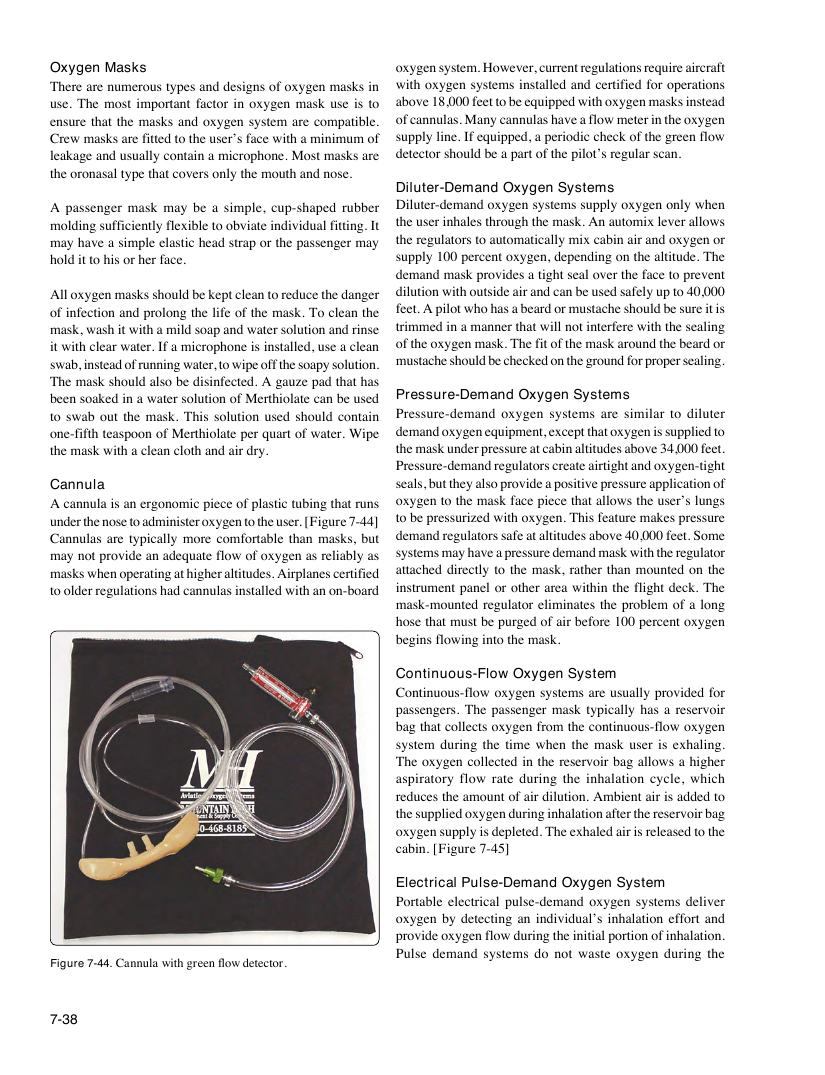
under the nose to administer oxygen to the user. [Figure 7-44] to be pressurized with oxygen. This feature makes pressure
Cannulas are typically more comfortable than masks, but demand regulators safe at altitudes above 40,000 feet. Some
may not provide an adequate flow of oxygen as reliably as systems may have a pressure demand mask with the regulator
masks when operating at higher altitudes. Airplanes certified attached directly to the mask, rather than mounted on the
to older regulations had cannulas installed with an on-board instrument panel or other area within the flight deck. The
mask-mounted regulator eliminates the problem of a long
hose that must be purged of air before 100 percent oxygen
begins flowing into the mask.
Continuous-Flow Oxygen System
Continuous-flow oxygen systems are usually provided for
passengers. The passenger mask typically has a reservoir
bag that collects oxygen from the continuous-flow oxygen
system during the time when the mask user is exhaling.
The oxygen collected in the reservoir bag allows a higher
aspiratory flow rate during the inhalation cycle, which
reduces the amount of air dilution. Ambient air is added to
the supplied oxygen during inhalation after the reservoir bag
oxygen supply is depleted. The exhaled air is released to the
cabin. [Figure 7-45]
Electrical Pulse-Demand Oxygen System
Portable electrical pulse-demand oxygen systems deliver
oxygen by detecting an individual’s inhalation effort and
provide oxygen flow during the initial portion of inhalation.
Pulse demand systems do not waste oxygen during the
Figure 7-44. Cannula with green flow detector.
7-38