FAA-H-8083-25C · Source PDF page 271
Aircraft Performance
Takeoff and Landing Performance · PHAK page 11-15
Searchable transcription
As discussed in Chapter 6, engine pressure ratio (EPR) is the ratio, the increase in takeoff distance would be approximately
ratio between exhaust pressure (jet blast) and inlet (static) 25 to 30 percent. Such a powerful effect requires proper
pressure on a turbo jet or turbo fan engine. An EPR gauge consideration of gross weight in predicting takeoff distance.
tells the pilot how much power the engines are generating.
The higher the EPR, the higher the engine thrust. EPR is The effect of wind on takeoff distance is large, and proper
used to avoid over-boosting an engine and to set takeoff and consideration must also be provided when predicting takeoff
go around power if needed. This information is important to distance. The effect of a headwind is to allow the aircraft to
know before taking off as it helps determine the performance reach the lift-off speed at a lower groundspeed, while the
of the aircraft. effect of a tailwind is to require the aircraft to achieve a
greater groundspeed to attain the lift-off speed.
In addition to the important factors of proper procedures,
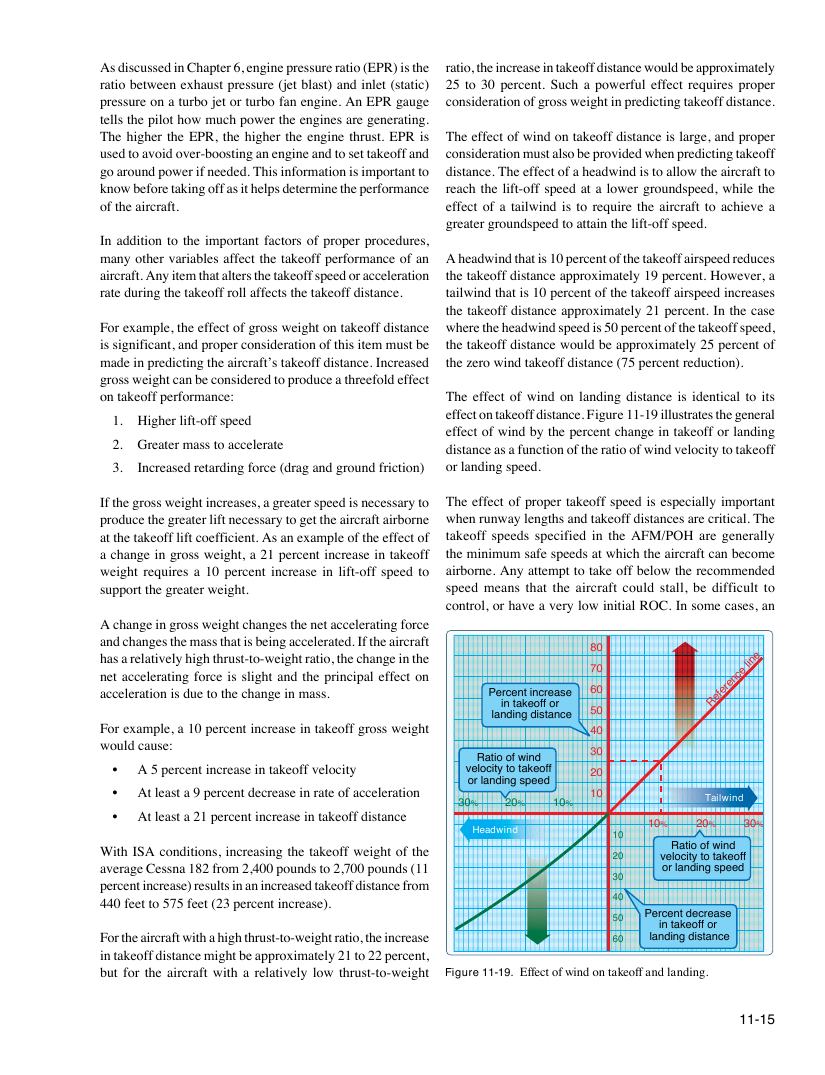
many other variables affect the takeoff performance of an A headwind that is 10 percent of the takeoff airspeed reduces
aircraft. Any item that alters the takeoff speed or acceleration the takeoff distance approximately 19 percent. However, a
rate during the takeoff roll affects the takeoff distance. tailwind that is 10 percent of the takeoff airspeed increases
the takeoff distance approximately 21 percent. In the case
For example, the effect of gross weight on takeoff distance where the headwind speed is 50 percent of the takeoff speed,
is significant, and proper consideration of this item must be the takeoff distance would be approximately 25 percent of
made in predicting the aircraft’s takeoff distance. Increased the zero wind takeoff distance (75 percent reduction).
gross weight can be considered to produce a threefold effect
on takeoff performance: The effect of wind on landing distance is identical to its
effect on takeoff distance. Figure 11-19 illustrates the general
1. Higher lift-off speed
effect of wind by the percent change in takeoff or landing
2. Greater mass to accelerate
distance as a function of the ratio of wind velocity to takeoff
3. Increased retarding force (drag and ground friction) or landing speed.
If the gross weight increases, a greater speed is necessary to The effect of proper takeoff speed is especially important
produce the greater lift necessary to get the aircraft airborne when runway lengths and takeoff distances are critical. The
at the takeoff lift coefficient. As an example of the effect of takeoff speeds specified in the AFM/POH are generally
a change in gross weight, a 21 percent increase in takeoff the minimum safe speeds at which the aircraft can become
weight requires a 10 percent increase in lift-off speed to airborne. Any attempt to take off below the recommended
support the greater weight. speed means that the aircraft could stall, be difficult to
control, or have a very low initial ROC. In some cases, an
A change in gross weight changes the net accelerating force
and changes the mass that is being accelerated. If the aircraft
80
has a relatively high thrust-to-weight ratio, the change in the n e
70 e
li
net accelerating force is slight and the principal effect on nc
e
acceleration is due to the change in mass. Percent increase 60 ef er
in takeoff or R
landing distance 50
For example, a 10 percent increase in takeoff gross weight
40
would cause:
30
Ratio of wind
• A 5 percent increase in takeoff velocity velocity to takeoff
20
or landing speed
• At least a 9 percent decrease in rate of acceleration 10
Tailwind
30% 20% 10%
• At least a 21 percent increase in takeoff distance
10% 20% 30%
Headwind
10
With ISA conditions, increasing the takeoff weight of the Ratio of wind
20 velocity to takeoff
average Cessna 182 from 2,400 pounds to 2,700 pounds (11 or landing speed
30
percent increase) results in an increased takeoff distance from
440 feet to 575 feet (23 percent increase). 40
Percent decrease
50
in takeoff or
For the aircraft with a high thrust-to-weight ratio, the increase 60 landing distance
in takeoff distance might be approximately 21 to 22 percent,
but for the aircraft with a relatively low thrust-to-weight Figure 11-19. Effect of wind on takeoff and landing.
11-15