FAA-H-8083-25C · Source PDF page 449
Aeromedical Factors
Apparent horizon · PHAK page 17-27
Searchable transcription
n
o
z
ori
h
al
u
A
ct
Apparent horizon
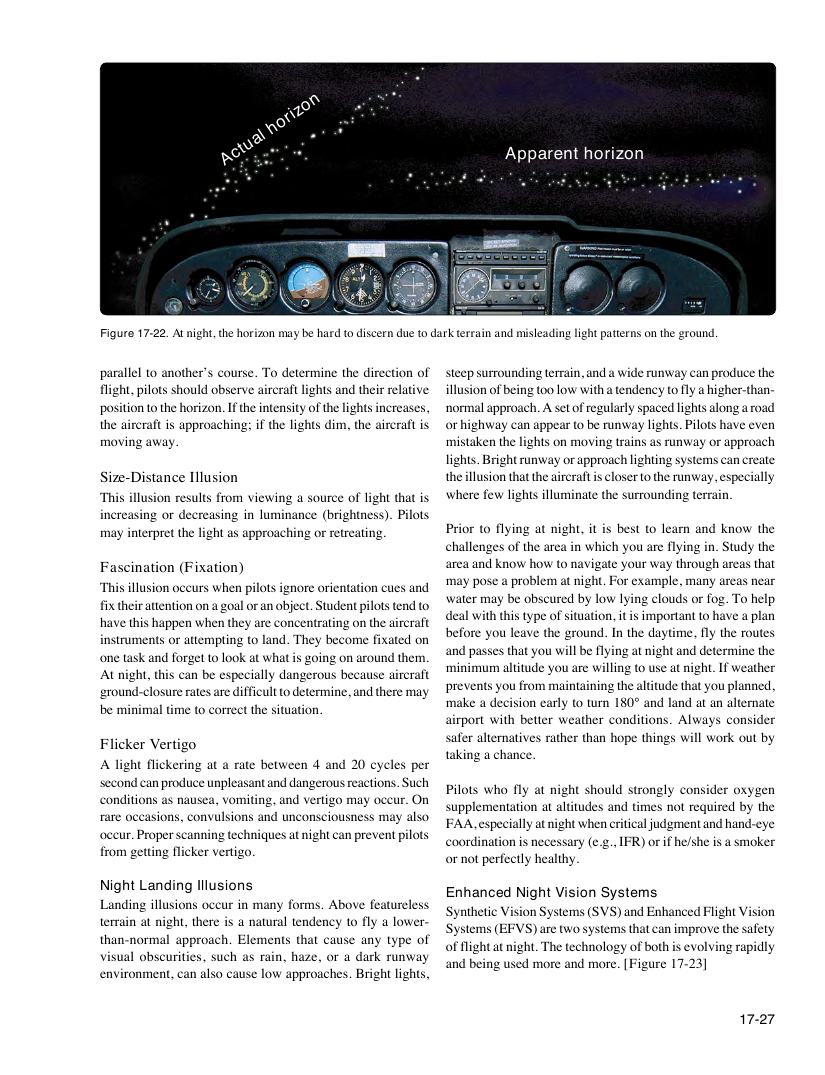
Figure 17-22. At night, the horizon may be hard to discern due to dark terrain and misleading light patterns on the ground.
parallel to another’s course. To determine the direction of steep surrounding terrain, and a wide runway can produce the
flight, pilots should observe aircraft lights and their relative illusion of being too low with a tendency to fly a higher-than-
position to the horizon. If the intensity of the lights increases, normal approach. A set of regularly spaced lights along a road
the aircraft is approaching; if the lights dim, the aircraft is or highway can appear to be runway lights. Pilots have even
moving away. mistaken the lights on moving trains as runway or approach
lights. Bright runway or approach lighting systems can create
Size-Distance Illusion the illusion that the aircraft is closer to the runway, especially
This illusion results from viewing a source of light that is where few lights illuminate the surrounding terrain.
increasing or decreasing in luminance (brightness). Pilots
may interpret the light as approaching or retreating. Prior to flying at night, it is best to learn and know the
challenges of the area in which you are flying in. Study the
Fascination (Fixation) area and know how to navigate your way through areas that
may pose a problem at night. For example, many areas near
This illusion occurs when pilots ignore orientation cues and
water may be obscured by low lying clouds or fog. To help
fix their attention on a goal or an object. Student pilots tend to
deal with this type of situation, it is important to have a plan
have this happen when they are concentrating on the aircraft
before you leave the ground. In the daytime, fly the routes
instruments or attempting to land. They become fixated on
and passes that you will be flying at night and determine the
one task and forget to look at what is going on around them.
minimum altitude you are willing to use at night. If weather
At night, this can be especially dangerous because aircraft
prevents you from maintaining the altitude that you planned,
ground-closure rates are difficult to determine, and there may
make a decision early to turn 180° and land at an alternate
be minimal time to correct the situation.
airport with better weather conditions. Always consider
safer alternatives rather than hope things will work out by
Flicker Vertigo
taking a chance.
A light flickering at a rate between 4 and 20 cycles per
second can produce unpleasant and dangerous reactions. Such
Pilots who fly at night should strongly consider oxygen
conditions as nausea, vomiting, and vertigo may occur. On
supplementation at altitudes and times not required by the
rare occasions, convulsions and unconsciousness may also
FAA, especially at night when critical judgment and hand-eye
occur. Proper scanning techniques at night can prevent pilots
coordination is necessary (e.g., IFR) or if he/she is a smoker
from getting flicker vertigo.
or not perfectly healthy.
Night Landing Illusions
Enhanced Night Vision Systems
Landing illusions occur in many forms. Above featureless
Synthetic Vision Systems (SVS) and Enhanced Flight Vision
terrain at night, there is a natural tendency to fly a lower-
Systems (EFVS) are two systems that can improve the safety
than-normal approach. Elements that cause any type of
of flight at night. The technology of both is evolving rapidly
visual obscurities, such as rain, haze, or a dark runway
and being used more and more. [Figure 17-23]
environment, can also cause low approaches. Bright lights,
17-27