FAA-H-8083-25C · Source PDF page 433
Aeromedical Factors
Featureless Terrain Illusion · PHAK page 17-11
Searchable transcription
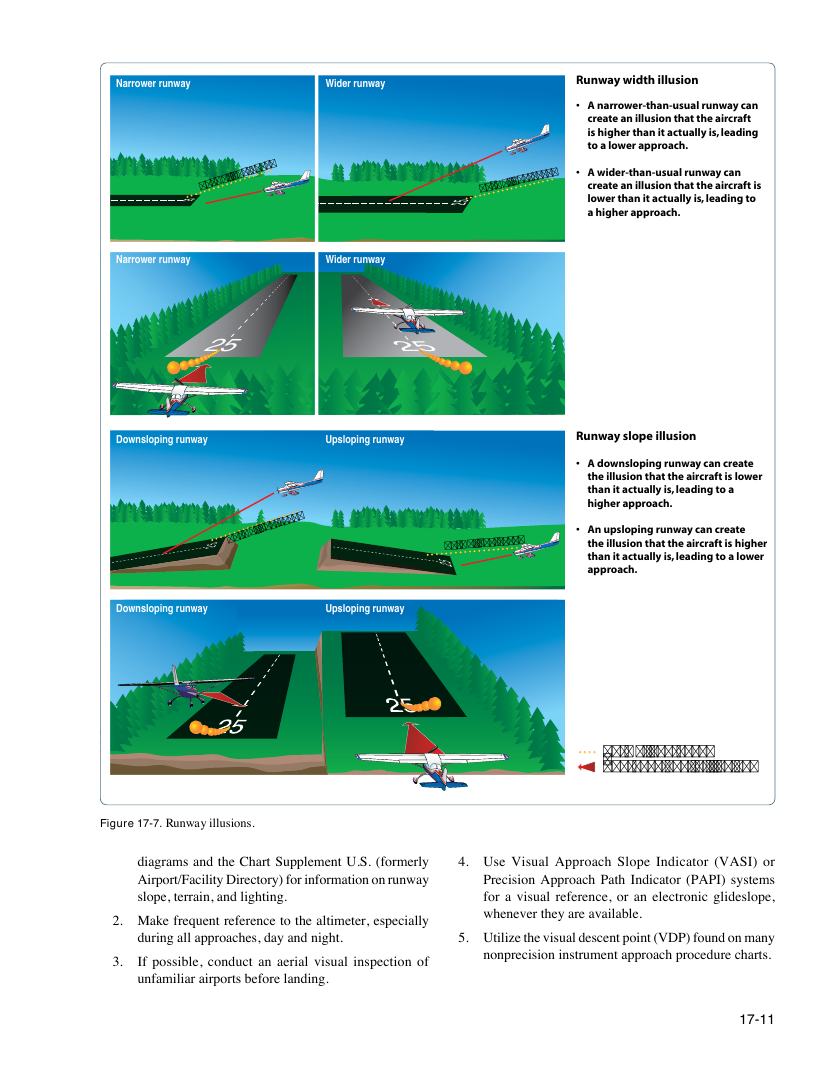
Figure 17-7. Runway illusions.
17-11
52
Normal Approach 52
25 25
Normal
Approach
52
Normal
Approach
52
Runway width illusion
Narrower runway Wider runway
• A narrower-than-usual runway can
create an illusion that the aircraft
is higher than it actually is, leading
to a lower approach.
Normal
Approach
• A
cr e
w
a
i
t
d
e
e
a
r-
n
t h
il
a
lu
n
s
-u
io
s
n
u a
th
l r
a
u
t
n
th
w
e
a
a
y
i
c
rc
a
r
n
a f t is
lower than it actually is, leading to
a higher approach.
Narrower runway Wider runway
Runway slope illusion
Downsloping runway Upsloping runway
• A downsloping runway can create
the illusion that the aircraft is lower
than it actually is, leading to a
higher approach.
• An upsloping runway can create
the illusion that the aircraft is higher
than it actually is, leading to a lower
approach.
Downsloping runway Upsloping runway
Normal approach
Approach due to illusion
diagrams and the Chart Supplement U.S. (formerly 4. Use Visual Approach Slope Indicator (VASI) or
Airport/Facility Directory) for information on runway Precision Approach Path Indicator (PAPI) systems
slope, terrain, and lighting. for a visual reference, or an electronic glideslope,
whenever they are available.
2. Make frequent reference to the altimeter, especially
during all approaches, day and night. 5. Utilize the visual descent point (VDP) found on many
nonprecision instrument approach procedure charts.
3. If possible, conduct an aerial visual inspection of
unfamiliar airports before landing.