FAA-H-8083-25C · Source PDF page 31
Introduction to Flying
Pilot Certifications · PHAK page 1-16
Searchable transcription
a specific make and basic model of aircraft, • Privileges—define where and when the pilot may fly,
Including modifications thereto that do not with whom they may fly, the purpose of the flight, and
change its handling or flight characteristics. the type of aircraft they are allowed to fly.
Examples include: 737-700, G-IV, and 1900; and
• Limitations—the FAA may impose limitations on a
2. As used with respect to the certification of pilot certificate if, during training or the practical test,
aircraft, means those aircraft which are similar the pilot does not demonstrate all skills necessary to
in design. Examples include: 737-700 and 737- exercise all privileges of a privilege level, category,
700C; G-IV and G-IV-X; and 1900 and 1900C. class, or type rating.
This system of definitions allows the FAA to group and Endorsements, a form of authorization, are written to establish
regulate aircraft to provide for their safe operation. that the certificate holder has received training in specific skill
areas. Endorsements are written and signed by an authorized
individual, usually a certificated flight instructor (CFI), and
Pilot Certifications
are based on aircraft classification. [Figure 1-21]
The type of intended flying influences what type of pilot’s
certificate is required. Eligibility, training, experience, Sport Pilot
and testing requirements differ depending on the type of To become a sport pilot, the student pilot is required to have
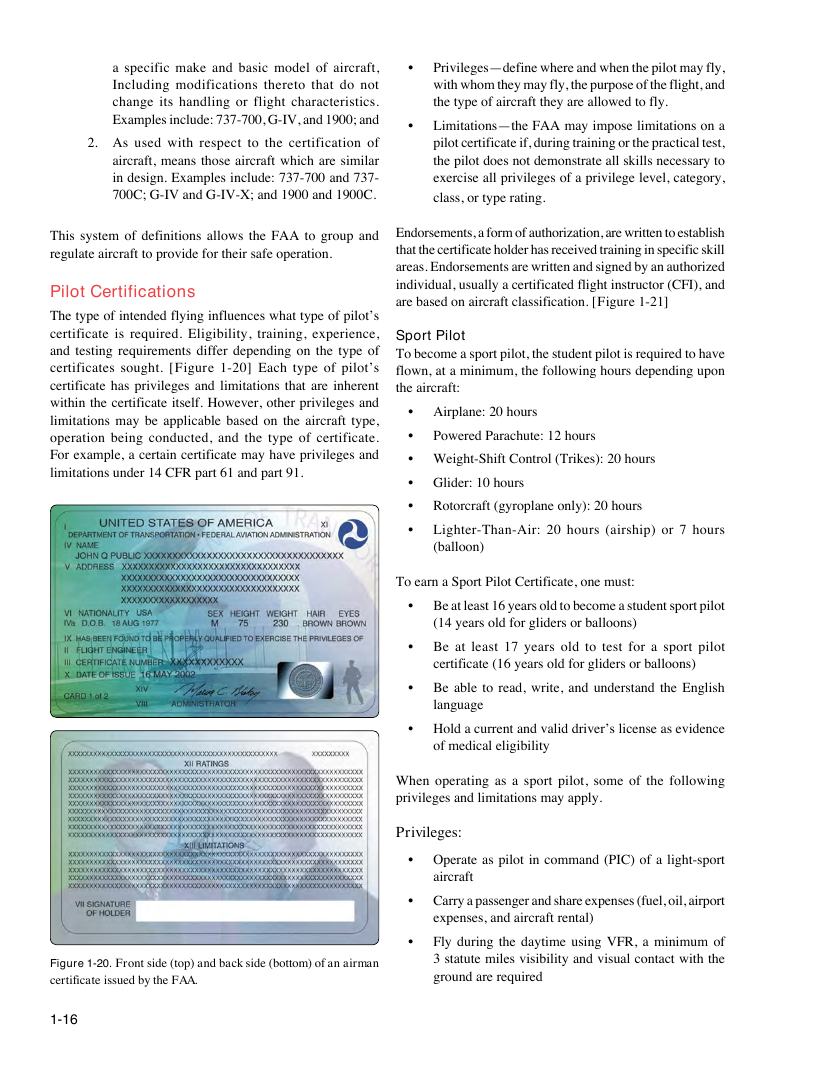
certificates sought. [Figure 1-20] Each type of pilot’s flown, at a minimum, the following hours depending upon
certificate has privileges and limitations that are inherent the aircraft:
within the certificate itself. However, other privileges and
• Airplane: 20 hours
limitations may be applicable based on the aircraft type,
operation being conducted, and the type of certificate. • Powered Parachute: 12 hours
For example, a certain certificate may have privileges and • Weight-Shift Control (Trikes): 20 hours
limitations under 14 CFR part 61 and part 91.
• Glider: 10 hours
• Rotorcraft (gyroplane only): 20 hours
• Lighter-Than-Air: 20 hours (airship) or 7 hours
(balloon)
To earn a Sport Pilot Certificate, one must:
• Be at least 16 years old to become a student sport pilot
(14 years old for gliders or balloons)
• Be at least 17 years old to test for a sport pilot
certificate (16 years old for gliders or balloons)
• Be able to read, write, and understand the English
language
• Hold a current and valid driver’s license as evidence
of medical eligibility
When operating as a sport pilot, some of the following
privileges and limitations may apply.
Privileges:
• Operate as pilot in command (PIC) of a light-sport
aircraft
• Carry a passenger and share expenses (fuel, oil, airport
expenses, and aircraft rental)
• Fly during the daytime using VFR, a minimum of
Figure 1-20. Front side (top) and back side (bottom) of an airman
3 statute miles visibility and visual contact with the
ground are required
certificate issued by the FAA.
1-16