FAA-H-8083-25C · Source PDF page 74
Aircraft Construction
Major Components · PHAK page 3-3
Searchable transcription
L
tfi
Pitching Rolling Yawing
Lateral axis Longitudinal axis Vertical axis
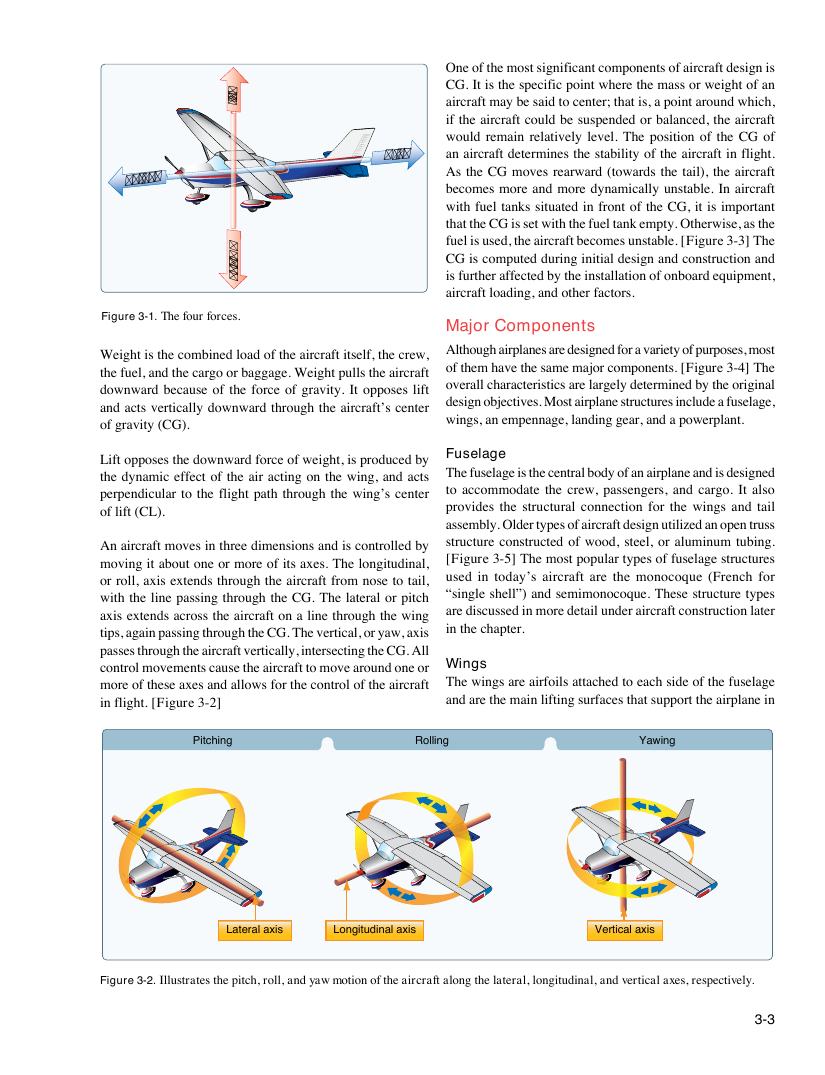
Figure 3-2. Illustrates the pitch, roll, and yaw motion of the aircraft along the lateral, longitudinal, and vertical axes, respectively.
3-3
T h r u s t
Weight
D r a g
One of the most significant components of aircraft design is
CG. It is the specific point where the mass or weight of an
aircraft may be said to center; that is, a point around which,
if the aircraft could be suspended or balanced, the aircraft
would remain relatively level. The position of the CG of
an aircraft determines the stability of the aircraft in flight.
As the CG moves rearward (towards the tail), the aircraft
becomes more and more dynamically unstable. In aircraft
with fuel tanks situated in front of the CG, it is important
that the CG is set with the fuel tank empty. Otherwise, as the
fuel is used, the aircraft becomes unstable. [Figure 3-3] The
CG is computed during initial design and construction and
is further affected by the installation of onboard equipment,
aircraft loading, and other factors.
Figure 3-1. The four forces.
Major Components
Although airplanes are designed for a variety of purposes, most
Weight is the combined load of the aircraft itself, the crew,
of them have the same major components. [Figure 3-4] The
the fuel, and the cargo or baggage. Weight pulls the aircraft
overall characteristics are largely determined by the original
downward because of the force of gravity. It opposes lift
design objectives. Most airplane structures include a fuselage,
and acts vertically downward through the aircraft’s center
wings, an empennage, landing gear, and a powerplant.
of gravity (CG).
Fuselage
Lift opposes the downward force of weight, is produced by
The fuselage is the central body of an airplane and is designed
the dynamic effect of the air acting on the wing, and acts
to accommodate the crew, passengers, and cargo. It also
perpendicular to the flight path through the wing’s center
provides the structural connection for the wings and tail
of lift (CL).
assembly. Older types of aircraft design utilized an open truss
structure constructed of wood, steel, or aluminum tubing.
An aircraft moves in three dimensions and is controlled by
[Figure 3-5] The most popular types of fuselage structures
moving it about one or more of its axes. The longitudinal,
used in today’s aircraft are the monocoque (French for
or roll, axis extends through the aircraft from nose to tail,
“single shell”) and semimonocoque. These structure types
with the line passing through the CG. The lateral or pitch
are discussed in more detail under aircraft construction later
axis extends across the aircraft on a line through the wing
in the chapter.
tips, again passing through the CG. The vertical, or yaw, axis
passes through the aircraft vertically, intersecting the CG. All
control movements cause the aircraft to move around one or Wings
more of these axes and allows for the control of the aircraft The wings are airfoils attached to each side of the fuselage
in flight. [Figure 3-2] and are the main lifting surfaces that support the airplane in