FAA-H-8083-25C · Source PDF page 123
Aerodynamics of Flight
Angle of Attack Indicators · PHAK page 5-26
Searchable transcription
L
C
F
W
L
C
L W F
L
W W
C F C
F
Figure 5-38. Forces exerted when pulling out of a dive.
100 13
12
90 11
10
80 9
8
60 7 6
40 5
4
20 3
2
0 1
0° 10° 20° 30° 40° 50° 60° 70° 80° 90°
5-26
deeps
llats
ni
esaercni
tnecreP
”G“
ro
rotcaf
daoL
Airfoil shape and degradation of that shape must also be
considered in a discussion of stalls. For example, if ice, snow,
and frost are allowed to accumulate on the surface of an aircraft,
the smooth airflow over the wing is disrupted. This causes the
boundary layer to separate at an AOA lower than that of the
critical angle. Lift is greatly reduced, altering expected aircraft
performance. If ice is allowed to accumulate on the aircraft
during flight, the weight of the aircraft is increased while the
ability to generate lift is decreased. [Figure 5-40] As little as
0.8 millimeter of ice on the upper wing surface increases drag
and reduces aircraft lift by 25 percent.
Pilots can encounter icing in any season, anywhere in the
country, at altitudes of up to 18,000 feet and sometimes
higher. Small aircraft, including commuter planes, are most
vulnerable because they fly at lower altitudes where ice is more
prevalent. They also lack mechanisms common on jet aircraft
that prevent ice buildup by heating the front edges of wings.
AOA and results in increased lift. The AOA must increase
Icing can occur in clouds any time the temperature drops
as the bank angle increases to counteract the increasing load
below freezing and super-cooled droplets build up on an
caused by centrifugal force. If at any time during a turn the
aircraft and freeze. (Super-cooled droplets are still liquid
AOA becomes excessive, the aircraft stalls.
even though the temperature is below 32 °Fahrenheit (F),
or 0 °Celsius (C).
At this point, the action of the aircraft during a stall should be
examined. To balance the aircraft aerodynamically, the CL
Angle of Attack Indicators
is normally located aft of the CG. Although this makes the
aircraft inherently nose-heavy, downwash on the horizontal The FAA along with the General Aviation Joint Steering
stabilizer counteracts this condition. At the point of stall, Committee (GAJSC) is promoting AOA indicators as one
when the upward force of the wing’s lift diminishes below of the many safety initiatives aimed at reducing the general
that required for sustained flight and the downward tail aviation accident rate. AOA indicators will specifically target
force decreases to a point of ineffectiveness, or causes it to Loss of Control (LOC) accidents. Loss of control is the
have an upward force, an unbalanced condition exists. This number one root cause of fatalities in both general aviation
causes the aircraft to pitch down abruptly, rotating about its and commercial aviation. More than 25 percent of general
CG. During this nose-down attitude, the AOA decreases and aviation fatal accidents occur during the maneuvering phase
the airspeed again increases. The smooth flow of air over of flight. Of those accidents, half involve stall/spin scenarios.
the wing begins again, lift returns, and the aircraft begins Technology such as AOA indicators can have a tremendous
to fly again. Considerable altitude may be lost before this impact on reversing this trend and are increasingly affordable
cycle is complete. for general aviation airplanes. [Figure 5-41]
The purpose of an AOA indicator is to give the pilot better
a s e or
situation awareness pertaining to the aerodynamic health
cr e a ct
e e d i n o a d f
Stall s p L
Bank Angle
Figure 5-40. Inflight ice formation.
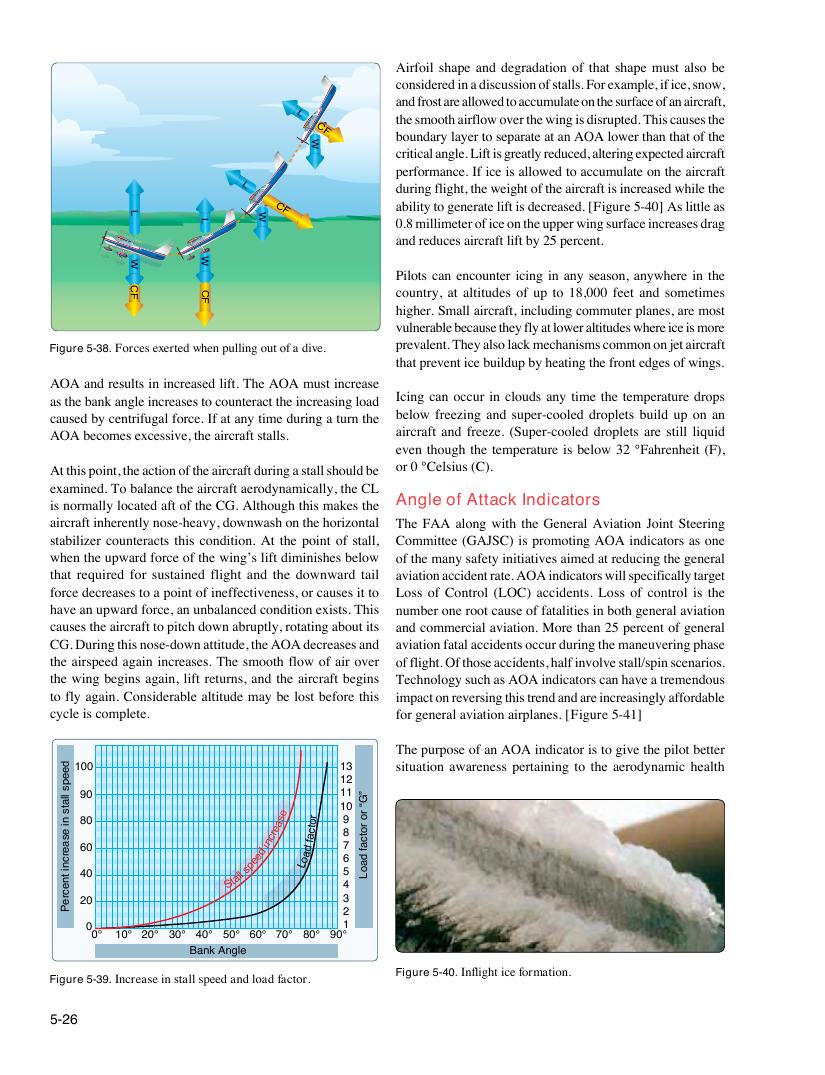
Figure 5-39. Increase in stall speed and load factor.