FAA-H-8083-25C · Source PDF page 126
Aerodynamics of Flight
Coefficient of Lift Curve · PHAK page 5-29
Searchable transcription
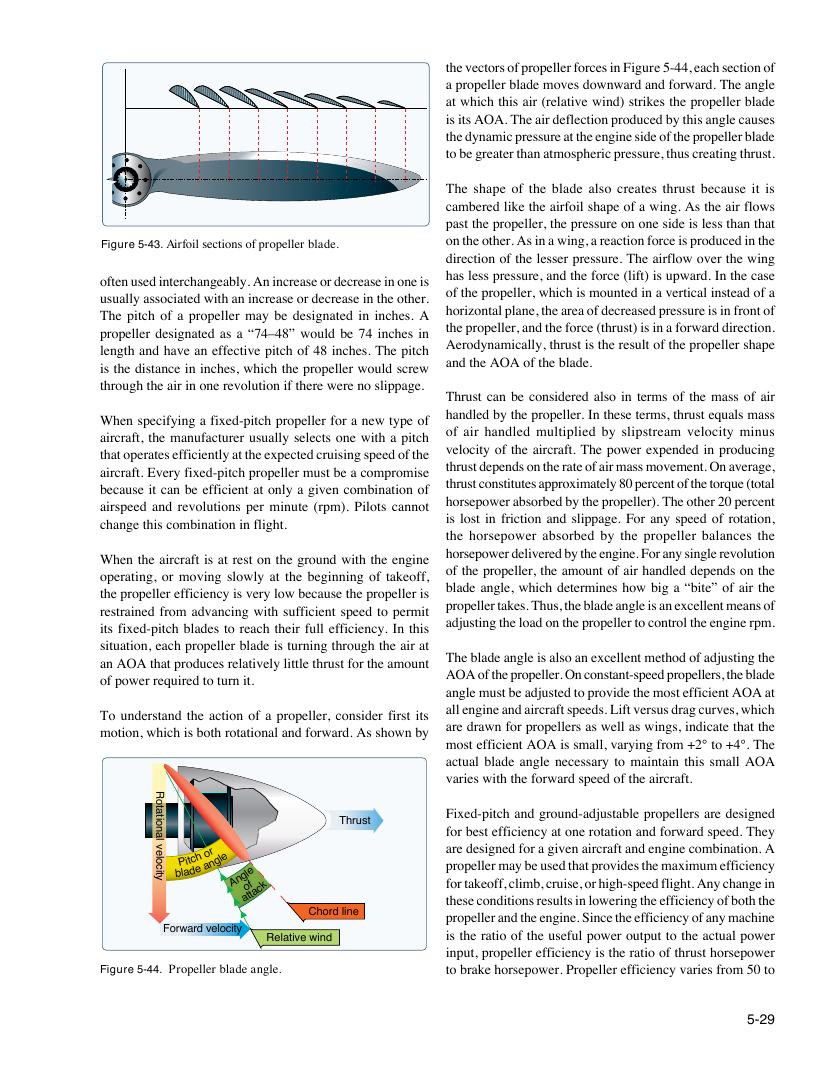
Figure 5-43. Airfoil sections of propeller blade.
Thrust
Chord line
Forward velocity
Relative wind
5-29
Rotational
velocity
the vectors of propeller forces in Figure 5-44, each section of
a propeller blade moves downward and forward. The angle
at which this air (relative wind) strikes the propeller blade
is its AOA. The air deflection produced by this angle causes
the dynamic pressure at the engine side of the propeller blade
to be greater than atmospheric pressure, thus creating thrust.
The shape of the blade also creates thrust because it is
cambered like the airfoil shape of a wing. As the air flows
past the propeller, the pressure on one side is less than that
on the other. As in a wing, a reaction force is produced in the
direction of the lesser pressure. The airflow over the wing
has less pressure, and the force (lift) is upward. In the case
often used interchangeably. An increase or decrease in one is
of the propeller, which is mounted in a vertical instead of a
usually associated with an increase or decrease in the other.
horizontal plane, the area of decreased pressure is in front of
The pitch of a propeller may be designated in inches. A
the propeller, and the force (thrust) is in a forward direction.
propeller designated as a “74–48” would be 74 inches in
Aerodynamically, thrust is the result of the propeller shape
length and have an effective pitch of 48 inches. The pitch
and the AOA of the blade.
is the distance in inches, which the propeller would screw
through the air in one revolution if there were no slippage.
Thrust can be considered also in terms of the mass of air
handled by the propeller. In these terms, thrust equals mass
When specifying a fixed-pitch propeller for a new type of
of air handled multiplied by slipstream velocity minus
aircraft, the manufacturer usually selects one with a pitch
velocity of the aircraft. The power expended in producing
that operates efficiently at the expected cruising speed of the
thrust depends on the rate of air mass movement. On average,
aircraft. Every fixed-pitch propeller must be a compromise
thrust constitutes approximately 80 percent of the torque (total
because it can be efficient at only a given combination of
horsepower absorbed by the propeller). The other 20 percent
airspeed and revolutions per minute (rpm). Pilots cannot
is lost in friction and slippage. For any speed of rotation,
change this combination in flight.
the horsepower absorbed by the propeller balances the
horsepower delivered by the engine. For any single revolution
When the aircraft is at rest on the ground with the engine
of the propeller, the amount of air handled depends on the
operating, or moving slowly at the beginning of takeoff,
blade angle, which determines how big a “bite” of air the
the propeller efficiency is very low because the propeller is
propeller takes. Thus, the blade angle is an excellent means of
restrained from advancing with sufficient speed to permit
adjusting the load on the propeller to control the engine rpm.
its fixed-pitch blades to reach their full efficiency. In this
situation, each propeller blade is turning through the air at
The blade angle is also an excellent method of adjusting the
an AOA that produces relatively little thrust for the amount
AOA of the propeller. On constant-speed propellers, the blade
of power required to turn it.
angle must be adjusted to provide the most efficient AOA at
all engine and aircraft speeds. Lift versus drag curves, which
To understand the action of a propeller, consider first its
are drawn for propellers as well as wings, indicate that the
motion, which is both rotational and forward. As shown by
most efficient AOA is small, varying from +2° to +4°. The
actual blade angle necessary to maintain this small AOA
varies with the forward speed of the aircraft.
Fixed-pitch and ground-adjustable propellers are designed
b P la it d c e h a o n r g l e A n g
a
o l
t
e f ta c k
f
a p f
th
o
o
r r
e
e r o
r
s
p t
b
d
e
a e
e
e k
c
l
s
s e l
o
t
i e o g
n
r
e
f n
d
f
m f e
f
,
i t
i
d c a
i
c
o
l y
i
f i
e
n
m o b
n
s
r e b
c
r
a , u
y
e
c s
s
g
a
r e
u
i u
t
v d
l t
i
o
e
s
s t n
n
h e
i
, a
e
n
a o t i
l
r
p r r
o
o
c r h
w
t
r o
a
i a
e
g v
t
f
i
r
h i t
o
i
d -
n
a
n
s e
g
n p s
a
d e
t
t
n
h
h e e
d
e
d e n
e
f
m f g
o
f
l i i
f
r
a n g
i
w
x
c
e h
i
i
a
t
e
c m .
r
n
o A
d
u
c
m m n
s
y
b
p
y
o
i e
e
c n
f
f
e
h a f
b
d
i a t
o
c
.
i n o
t
i
T
g
h
e n
h
n e .
t
e
c
h
i A
y
n y
e
propeller and the engine. Since the efficiency of any machine
is the ratio of the useful power output to the actual power
input, propeller efficiency is the ratio of thrust horsepower
Figure 5-44. Propeller blade angle. to brake horsepower. Propeller efficiency varies from 50 to