FAA-H-8083-25C · Source PDF page 108
Aerodynamics of Flight
Ground Effect · PHAK page 5-11
Searchable transcription
deriuqer
tsurhT
Velocity
C
tneiciffeoc
tfiL
L
In ground effect
Out of ground effect
Out of ground effect
In ground effect
Angle of attack
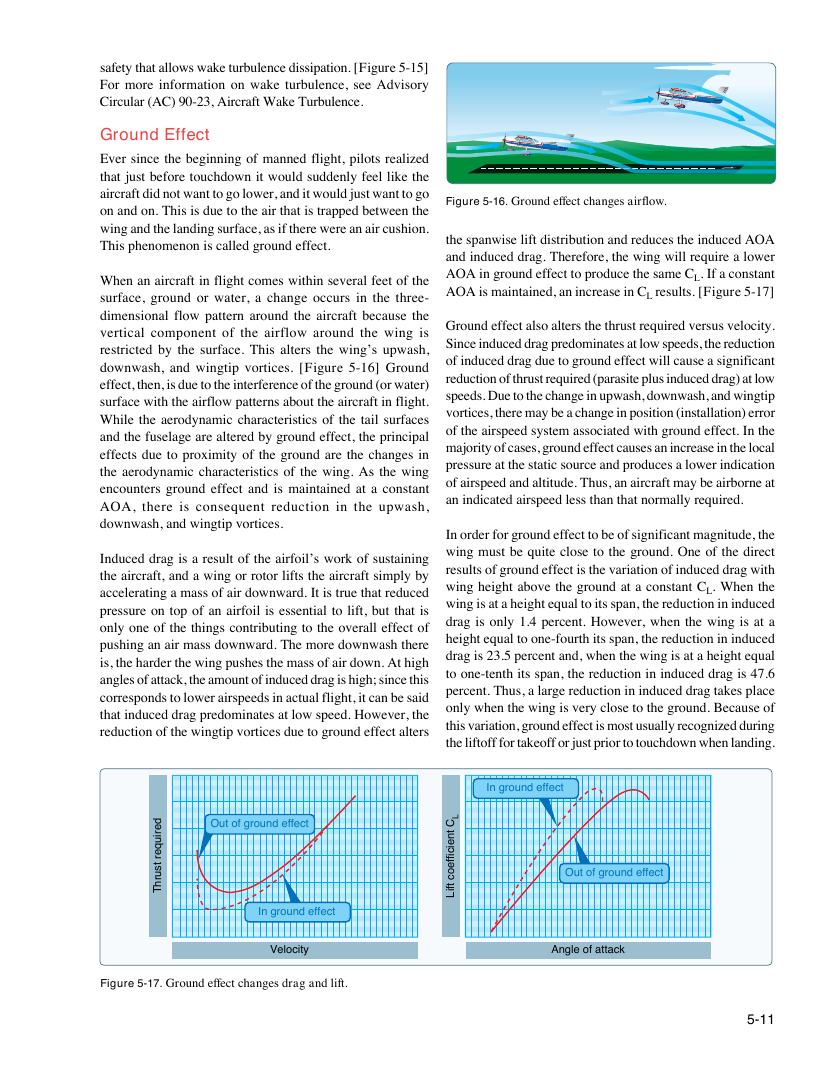
Figure 5-17. Ground effect changes drag and lift.
41
safety that allows wake turbulence dissipation. [Figure 5-15]
For more information on wake turbulence, see Advisory
Circular (AC) 90-23, Aircraft Wake Turbulence.
Ground Effect
Ever since the beginning of manned flight, pilots realized
that just before touchdown it would suddenly feel like the
aircraft did not want to go lower, and it would just want to go
Figure 5-16. Ground effect changes airflow.
on and on. This is due to the air that is trapped between the
wing and the landing surface, as if there were an air cushion.
the spanwise lift distribution and reduces the induced AOA
This phenomenon is called ground effect.
and induced drag. Therefore, the wing will require a lower
AOA in ground effect to produce the same C . If a constant
When an aircraft in flight comes within several feet of the L
AOA is maintained, an increase in C results. [Figure 5-17]
surface, ground or water, a change occurs in the three- L
dimensional flow pattern around the aircraft because the
Ground effect also alters the thrust required versus velocity.
vertical component of the airflow around the wing is
Since induced drag predominates at low speeds, the reduction
restricted by the surface. This alters the wing’s upwash,
of induced drag due to ground effect will cause a significant
downwash, and wingtip vortices. [Figure 5-16] Ground
reduction of thrust required (parasite plus induced drag) at low
effect, then, is due to the interference of the ground (or water)
speeds. Due to the change in upwash, downwash, and wingtip
surface with the airflow patterns about the aircraft in flight.
vortices, there may be a change in position (installation) error
While the aerodynamic characteristics of the tail surfaces
of the airspeed system associated with ground effect. In the
and the fuselage are altered by ground effect, the principal
majority of cases, ground effect causes an increase in the local
effects due to proximity of the ground are the changes in
pressure at the static source and produces a lower indication
the aerodynamic characteristics of the wing. As the wing
of airspeed and altitude. Thus, an aircraft may be airborne at
encounters ground effect and is maintained at a constant
an indicated airspeed less than that normally required.
AOA, there is consequent reduction in the upwash,
downwash, and wingtip vortices.
In order for ground effect to be of significant magnitude, the
wing must be quite close to the ground. One of the direct
Induced drag is a result of the airfoil’s work of sustaining
results of ground effect is the variation of induced drag with
the aircraft, and a wing or rotor lifts the aircraft simply by
wing height above the ground at a constant C . When the
accelerating a mass of air downward. It is true that reduced L
wing is at a height equal to its span, the reduction in induced
pressure on top of an airfoil is essential to lift, but that is
drag is only 1.4 percent. However, when the wing is at a
only one of the things contributing to the overall effect of
height equal to one-fourth its span, the reduction in induced
pushing an air mass downward. The more downwash there
drag is 23.5 percent and, when the wing is at a height equal
is, the harder the wing pushes the mass of air down. At high
to one-tenth its span, the reduction in induced drag is 47.6
angles of attack, the amount of induced drag is high; since this
percent. Thus, a large reduction in induced drag takes place
corresponds to lower airspeeds in actual flight, it can be said
only when the wing is very close to the ground. Because of
that induced drag predominates at low speed. However, the
this variation, ground effect is most usually recognized during
reduction of the wingtip vortices due to ground effect alters
the liftoff for takeoff or just prior to touchdown when landing.