FAA-H-8083-25C · Source PDF page 173
Aircraft Systems
Superchargers and Turbosuperchargers · PHAK page 7-13
Searchable transcription
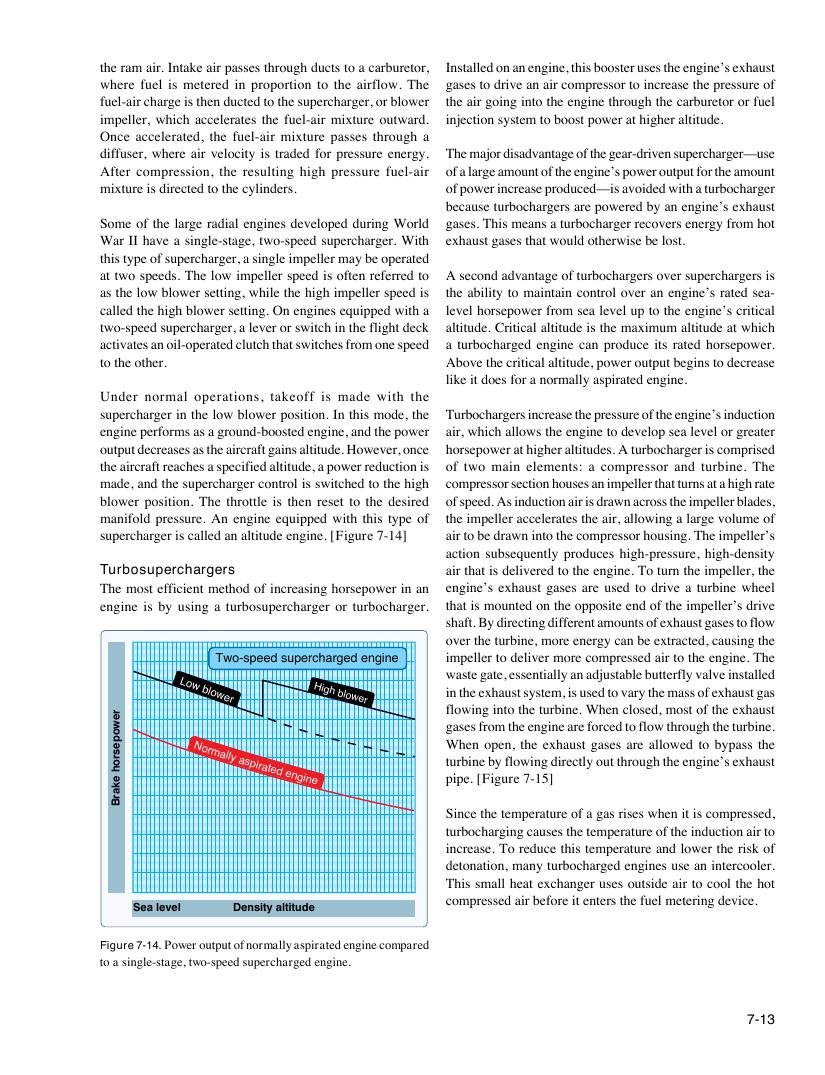
Figure 7-14. Power output of normally aspirated engine compared
to a single-stage, two-speed supercharged engine.
7-13
rewopesroh
ekarB
the ram air. Intake air passes through ducts to a carburetor, Installed on an engine, this booster uses the engine’s exhaust
where fuel is metered in proportion to the airflow. The gases to drive an air compressor to increase the pressure of
fuel-air charge is then ducted to the supercharger, or blower the air going into the engine through the carburetor or fuel
impeller, which accelerates the fuel-air mixture outward. injection system to boost power at higher altitude.
Once accelerated, the fuel-air mixture passes through a
diffuser, where air velocity is traded for pressure energy. The major disadvantage of the gear-driven supercharger––use
After compression, the resulting high pressure fuel-air of a large amount of the engine’s power output for the amount
mixture is directed to the cylinders. of power increase produced––is avoided with a turbocharger
because turbochargers are powered by an engine’s exhaust
Some of the large radial engines developed during World gases. This means a turbocharger recovers energy from hot
War II have a single-stage, two-speed supercharger. With exhaust gases that would otherwise be lost.
this type of supercharger, a single impeller may be operated
at two speeds. The low impeller speed is often referred to A second advantage of turbochargers over superchargers is
as the low blower setting, while the high impeller speed is the ability to maintain control over an engine’s rated sea-
called the high blower setting. On engines equipped with a level horsepower from sea level up to the engine’s critical
two-speed supercharger, a lever or switch in the flight deck altitude. Critical altitude is the maximum altitude at which
activates an oil-operated clutch that switches from one speed a turbocharged engine can produce its rated horsepower.
to the other. Above the critical altitude, power output begins to decrease
like it does for a normally aspirated engine.
Under normal operations, takeoff is made with the
supercharger in the low blower position. In this mode, the Turbochargers increase the pressure of the engine’s induction
engine performs as a ground-boosted engine, and the power air, which allows the engine to develop sea level or greater
output decreases as the aircraft gains altitude. However, once horsepower at higher altitudes. A turbocharger is comprised
the aircraft reaches a specified altitude, a power reduction is of two main elements: a compressor and turbine. The
made, and the supercharger control is switched to the high compressor section houses an impeller that turns at a high rate
blower position. The throttle is then reset to the desired of speed. As induction air is drawn across the impeller blades,
manifold pressure. An engine equipped with this type of the impeller accelerates the air, allowing a large volume of
supercharger is called an altitude engine. [Figure 7-14] air to be drawn into the compressor housing. The impeller’s
action subsequently produces high-pressure, high-density
Turbosuperchargers air that is delivered to the engine. To turn the impeller, the
The most efficient method of increasing horsepower in an engine’s exhaust gases are used to drive a turbine wheel
engine is by using a turbosupercharger or turbocharger. that is mounted on the opposite end of the impeller’s drive
shaft. By directing different amounts of exhaust gases to flow
over the turbine, more energy can be extracted, causing the
Two-speed supercharged engine impeller to deliver more compressed air to the engine. The
waste gate, essentially an adjustable butterfly valve installed
Low
blower High blower i
f
n
lo
t
w
he
in
e
g
x h
in
a
t
u
o
s t
t h
sy
e
s
t
t
u
e
r
m
bi
,
n
is
e .
u
W
sed
h e
to
n
v
c
a
lo
ry
se
t
d
h
,
e
m
m
o
a
s
s
t
s
o
o
f
f e
th
x
e
h a
e
u
x
s
h
t
a
g
u
a
s
s
t
gases from the engine are forced to flow through the turbine.
Normally
aspirated
engine
W
t
p
u
i
r
p
h
b
e
e
i
.
n
n
[
e
F
o
b
i
p
g
y
e
u
n
f
r
l
,
o
e
w
t
7
h
i
-
e
n
1
g
5
e
]
x
d
h
ir
a
e
u
c
s
t
t
l y
g
o
a
u
se
t
s
th
a
ro
re
u g
a
h
ll
t
o
h
w
e
e
e
d
n g
to
in e
b
’
y
s
p
e
a
x
s
h
s
a
t
u
h
s
e
t
Since the temperature of a gas rises when it is compressed,
turbocharging causes the temperature of the induction air to
increase. To reduce this temperature and lower the risk of
detonation, many turbocharged engines use an intercooler.
This small heat exchanger uses outside air to cool the hot
compressed air before it enters the fuel metering device.
Sea level Density altitude