FAA-H-8083-25C · Source PDF page 295
Weather Theory
Wind and Currents · PHAK page 12-11
Searchable transcription
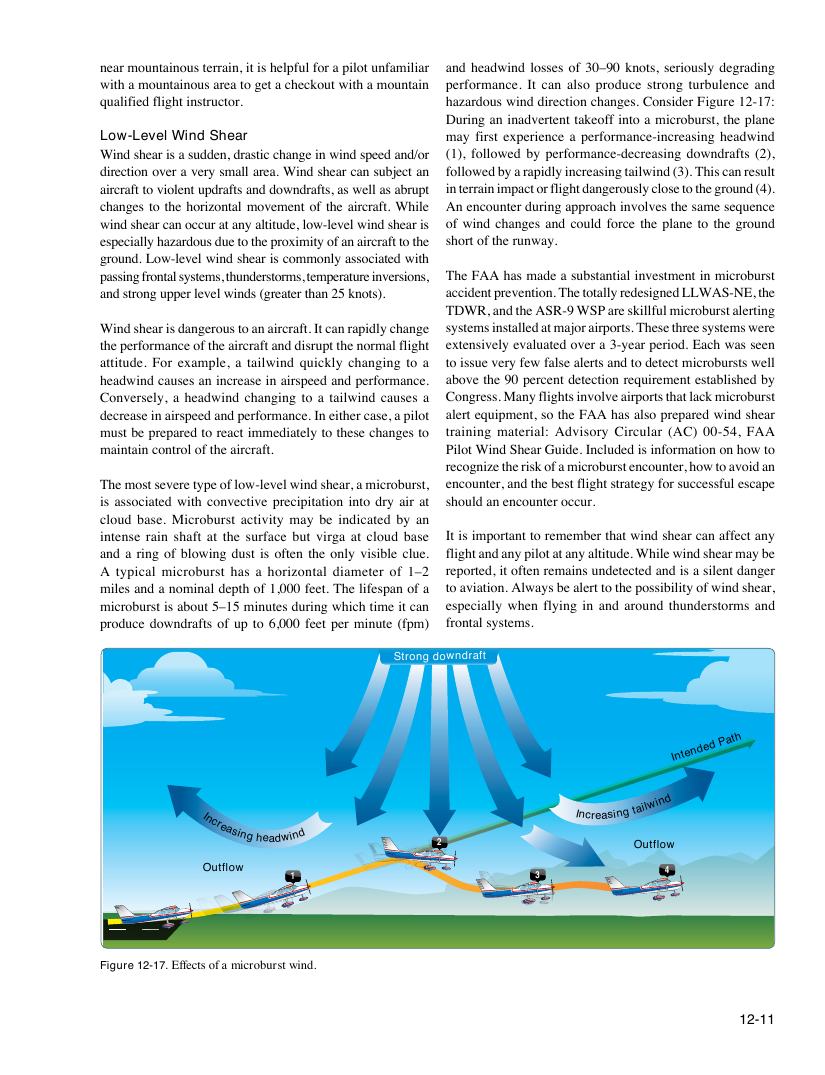
near mountainous terrain, it is helpful for a pilot unfamiliar and headwind losses of 30–90 knots, seriously degrading
with a mountainous area to get a checkout with a mountain performance. It can also produce strong turbulence and
qualified flight instructor. hazardous wind direction changes. Consider Figure 12-17:
During an inadvertent takeoff into a microburst, the plane
Low-Level Wind Shear may first experience a performance-increasing headwind
Wind shear is a sudden, drastic change in wind speed and/or (1), followed by performance-decreasing downdrafts (2),
direction over a very small area. Wind shear can subject an followed by a rapidly increasing tailwind (3). This can result
aircraft to violent updrafts and downdrafts, as well as abrupt in terrain impact or flight dangerously close to the ground (4).
changes to the horizontal movement of the aircraft. While An encounter during approach involves the same sequence
wind shear can occur at any altitude, low-level wind shear is of wind changes and could force the plane to the ground
especially hazardous due to the proximity of an aircraft to the short of the runway.
ground. Low-level wind shear is commonly associated with
passing frontal systems, thunderstorms, temperature inversions, The FAA has made a substantial investment in microburst
and strong upper level winds (greater than 25 knots). accident prevention. The totally redesigned LLWAS-NE, the
TDWR, and the ASR-9 WSP are skillful microburst alerting
Wind shear is dangerous to an aircraft. It can rapidly change systems installed at major airports. These three systems were
the performance of the aircraft and disrupt the normal flight extensively evaluated over a 3-year period. Each was seen
attitude. For example, a tailwind quickly changing to a to issue very few false alerts and to detect microbursts well
headwind causes an increase in airspeed and performance. above the 90 percent detection requirement established by
Conversely, a headwind changing to a tailwind causes a Congress. Many flights involve airports that lack microburst
decrease in airspeed and performance. In either case, a pilot alert equipment, so the FAA has also prepared wind shear
must be prepared to react immediately to these changes to training material: Advisory Circular (AC) 00-54, FAA
maintain control of the aircraft. Pilot Wind Shear Guide. Included is information on how to
recognize the risk of a microburst encounter, how to avoid an
The most severe type of low-level wind shear, a microburst, encounter, and the best flight strategy for successful escape
is associated with convective precipitation into dry air at should an encounter occur.
cloud base. Microburst activity may be indicated by an
intense rain shaft at the surface but virga at cloud base It is important to remember that wind shear can affect any
and a ring of blowing dust is often the only visible clue. flight and any pilot at any altitude. While wind shear may be
A typical microburst has a horizontal diameter of 1–2 reported, it often remains undetected and is a silent danger
miles and a nominal depth of 1,000 feet. The lifespan of a to aviation. Always be alert to the possibility of wind shear,
microburst is about 5–15 minutes during which time it can especially when flying in and around thunderstorms and
produce downdrafts of up to 6,000 feet per minute (fpm) frontal systems.
Strong downdraft
Intended
Path
Increasing
headwind
2
Increasing t
O
ai
u
lw
tf
i
l
n
o
d
w
Outflow 4
1 3
Figure 12-17. Effects of a microburst wind.
12-11