FAA-H-8083-25C · Source PDF page 371
Airport Operations
ARRESTOR BED · PHAK page 14-37
Searchable transcription
Runway safety area length
Runway Set back
ARRESTOR BED
Side steps
htdiw
yawnuR
Typical Plan View
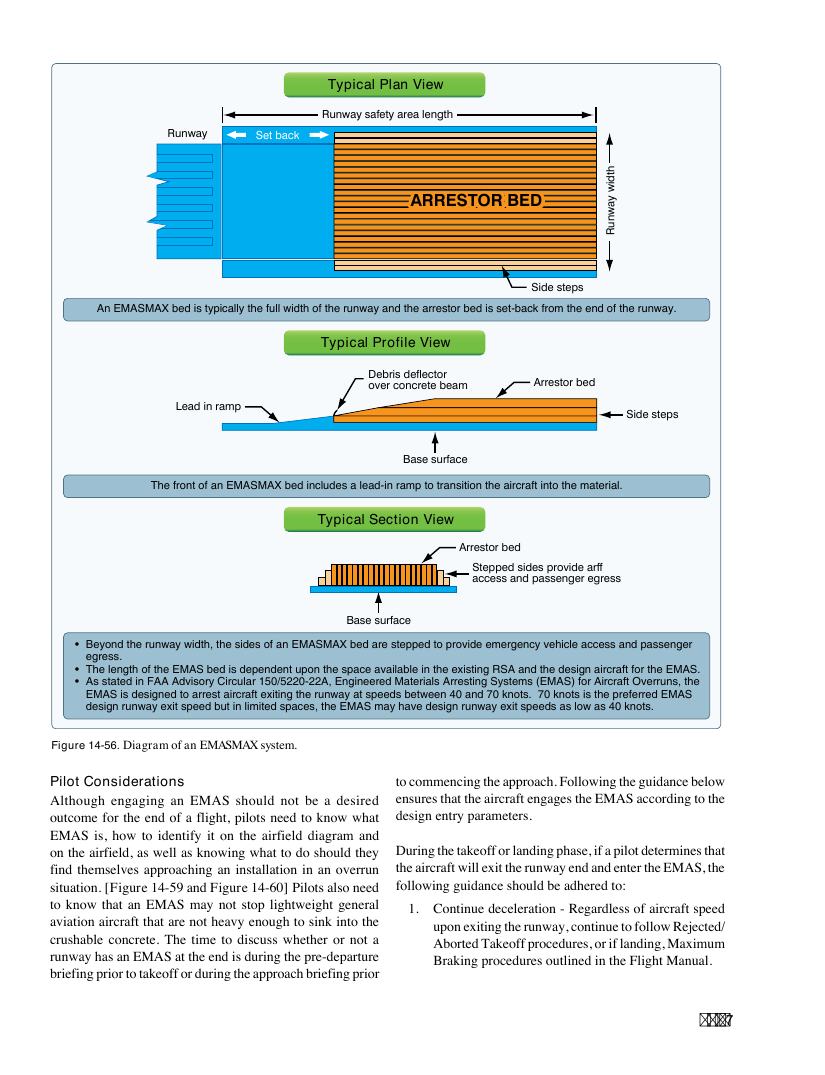
An EMASMAX bed is typically the full width of the runway and the arrestor bed is set-back from the end of the runway.
Typical Profile View
Debris deflector
over concrete beam Arrestor bed
Lead in ramp
Side steps
Base surface
The front of an EMASMAX bed includes a lead-in ramp to transition the aircraft into the material.
Typical Section View
Arrestor bed
Stepped sides provide arff
access and passenger egress
Base surface
• Beyond the runway width, the sides of an EMASMAX bed are stepped to provide emergency vehicle access and passenger
egress.
• The length of the EMAS bed is dependent upon the space available in the existing RSA and the design aircraft for the EMAS.
• As stated in FAA Advisory Circular 150/5220-22A, Engineered Materials Arresting Systems (EMAS) for Aircraft Overruns, the
EMAS is designed to arrest aircraft exiting the runway at speeds between 40 and 70 knots. 70 knots is the preferred EMAS
design runway exit speed but in limited spaces, the EMAS may have design runway exit speeds as low as 40 knots.
Figure 14-56. Diagram of an EMASMAX system.
Pilot Considerations to commencing the approach. Following the guidance below
Although engaging an EMAS should not be a desired ensures that the aircraft engages the EMAS according to the
outcome for the end of a flight, pilots need to know what design entry parameters.
EMAS is, how to identify it on the airfield diagram and
on the airfield, as well as knowing what to do should they During the takeoff or landing phase, if a pilot determines that
find themselves approaching an installation in an overrun the aircraft will exit the runway end and enter the EMAS, the
situation. [Figure 14-59 and Figure 14-60] Pilots also need following guidance should be adhered to:
to know that an EMAS may not stop lightweight general
1. Continue deceleration - Regardless of aircraft speed
aviation aircraft that are not heavy enough to sink into the
upon exiting the runway, continue to follow Rejected/
crushable concrete. The time to discuss whether or not a
Aborted Takeoff procedures, or if landing, Maximum
runway has an EMAS at the end is during the pre-departure
Braking procedures outlined in the Flight Manual.
briefing prior to takeoff or during the approach briefing prior
14-37