FAA-H-8083-25C · Source PDF page 361
Airport Operations
Terminal Area · PHAK page 14-27
Searchable transcription
52
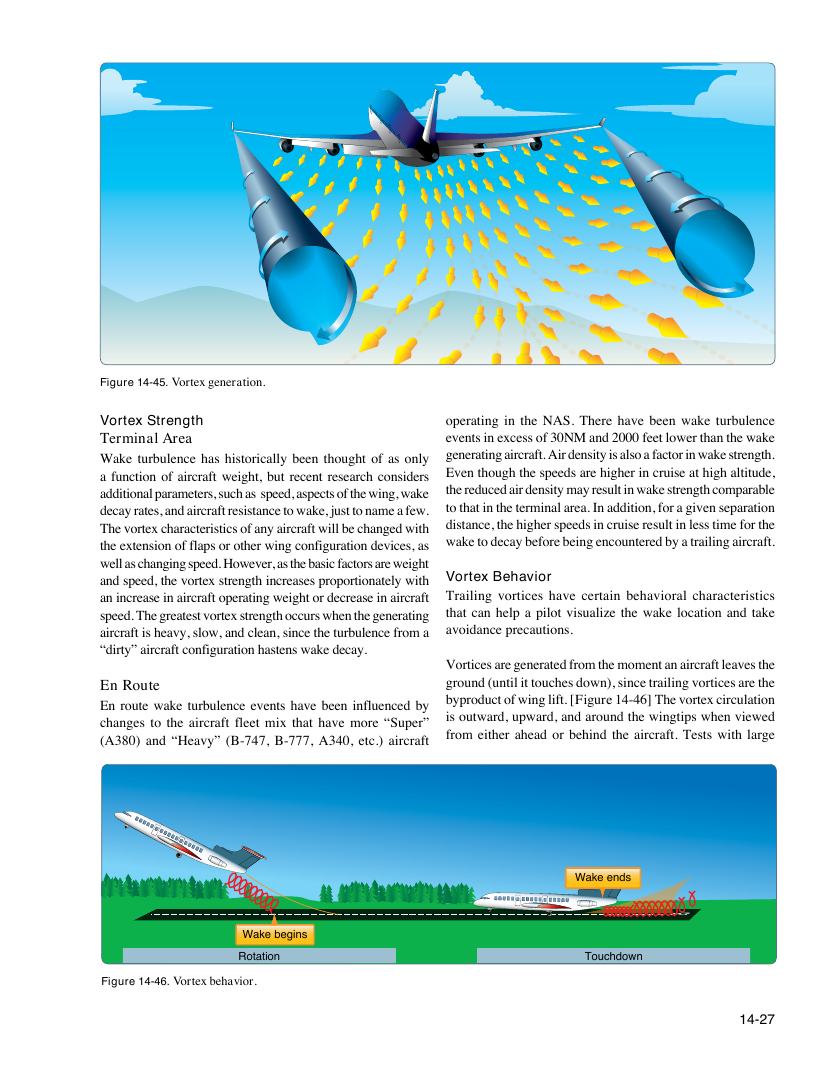
Figure 14-45. Vortex generation.
Vortex Strength operating in the NAS. There have been wake turbulence
Terminal Area events in excess of 30NM and 2000 feet lower than the wake
Wake turbulence has historically been thought of as only generating aircraft. Air density is also a factor in wake strength.
a function of aircraft weight, but recent research considers Even though the speeds are higher in cruise at high altitude,
additional parameters, such as speed, aspects of the wing, wake the reduced air density may result in wake strength comparable
decay rates, and aircraft resistance to wake, just to name a few. to that in the terminal area. In addition, for a given separation
The vortex characteristics of any aircraft will be changed with distance, the higher speeds in cruise result in less time for the
the extension of flaps or other wing configuration devices, as wake to decay before being encountered by a trailing aircraft.
well as changing speed. However, as the basic factors are weight
and speed, the vortex strength increases proportionately with Vortex Behavior
an increase in aircraft operating weight or decrease in aircraft Trailing vortices have certain behavioral characteristics
speed. The greatest vortex strength occurs when the generating that can help a pilot visualize the wake location and take
aircraft is heavy, slow, and clean, since the turbulence from a avoidance precautions.
“dirty” aircraft configuration hastens wake decay.
Vortices are generated from the moment an aircraft leaves the
En Route ground (until it touches down), since trailing vortices are the
byproduct of wing lift. [Figure 14-46] The vortex circulation
En route wake turbulence events have been influenced by
is outward, upward, and around the wingtips when viewed
changes to the aircraft fleet mix that have more “Super”
from either ahead or behind the aircraft. Tests with large
(A380) and “Heavy” (B-747, B-777, A340, etc.) aircraft
Wake ends
Wake begins
Rotation Touchdown
Figure 14-46. Vortex behavior.