FAA-H-8083-25C · Source PDF page 23
Introduction to Flying
Field Offices · PHAK page 1-8
Searchable transcription
Code of Federal Regulations
Title Volume Chapter Subchapters
Title 14 1 I A Definitions and Abbreviations
Aeronautics B Procedural Rules
and Space C Aircraft
2 D Airmen
E Airspace
F Air Traffic and General Rules
3 G Air Carriers and Operators for Compensation or Hire: Certification and
Operations
H Schools and Other Certified Agencies
I Airports
J Navigational Facilities
K Administrative Regulations
L–M Reserved
N War Risk Insurance
4 II A Economic Regulations
B Procedural Regulations
C Reserved
D Special Regulations
E Organization
F Policy Statements
III A General
B Procedure
C Licensing
5 V
VI A Office of Management and Budget
B Air Transportation Stabilization Board
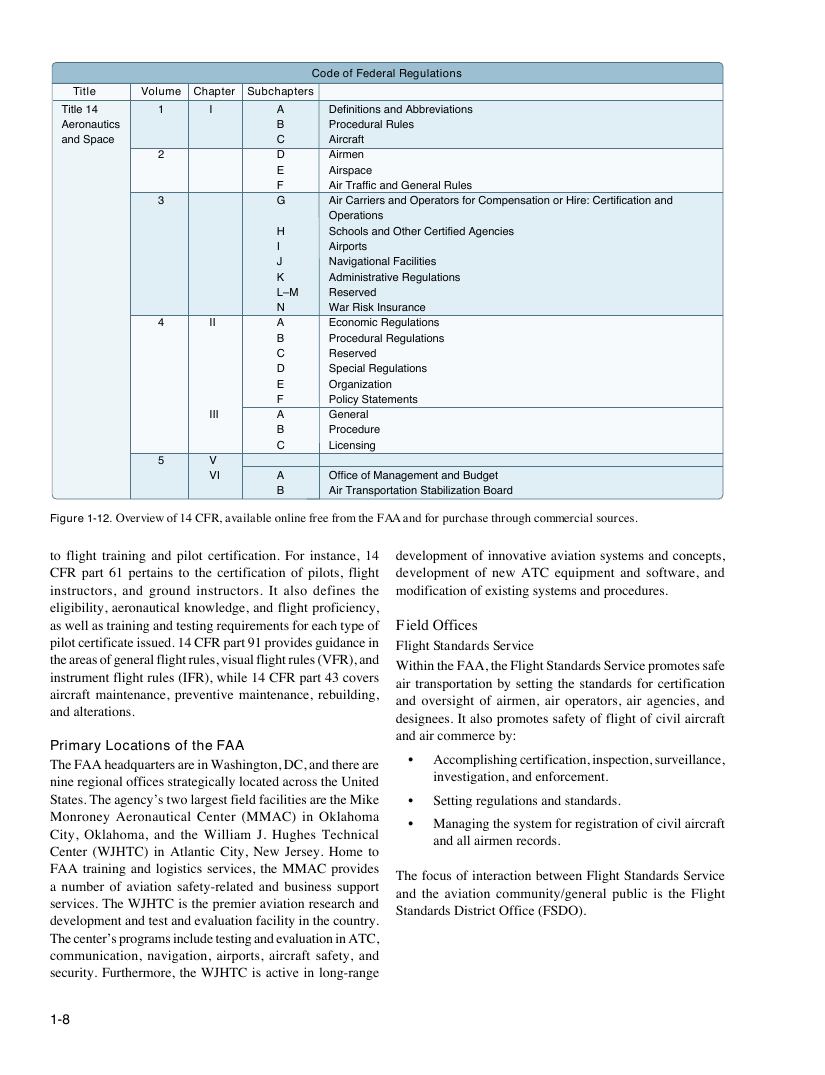
Figure 1-12. Overview of 14 CFR, available online free from the FAA and for purchase through commercial sources.
to flight training and pilot certification. For instance, 14 development of innovative aviation systems and concepts,
CFR part 61 pertains to the certification of pilots, flight development of new ATC equipment and software, and
instructors, and ground instructors. It also defines the modification of existing systems and procedures.
eligibility, aeronautical knowledge, and flight proficiency,
as well as training and testing requirements for each type of Field Offices
pilot certificate issued. 14 CFR part 91 provides guidance in Flight Standards Service
the areas of general flight rules, visual flight rules (VFR), and
Within the FAA, the Flight Standards Service promotes safe
instrument flight rules (IFR), while 14 CFR part 43 covers
air transportation by setting the standards for certification
aircraft maintenance, preventive maintenance, rebuilding,
and oversight of airmen, air operators, air agencies, and
and alterations.
designees. It also promotes safety of flight of civil aircraft
and air commerce by:
Primary Locations of the FAA
• Accomplishing certification, inspection, surveillance,
The FAA headquarters are in Washington, DC, and there are
investigation, and enforcement.
nine regional offices strategically located across the United
States. The agency’s two largest field facilities are the Mike • Setting regulations and standards.
Monroney Aeronautical Center (MMAC) in Oklahoma
• Managing the system for registration of civil aircraft
City, Oklahoma, and the William J. Hughes Technical
and all airmen records.
Center (WJHTC) in Atlantic City, New Jersey. Home to
FAA training and logistics services, the MMAC provides
The focus of interaction between Flight Standards Service
a number of aviation safety-related and business support
and the aviation community/general public is the Flight
services. The WJHTC is the premier aviation research and
Standards District Office (FSDO).
development and test and evaluation facility in the country.
The center’s programs include testing and evaluation in ATC,
communication, navigation, airports, aircraft safety, and
security. Furthermore, the WJHTC is active in long-range
1-8