FAA-H-8083-25C · Source PDF page 64
Aeronautical Decision-Making
Managing Risks · PHAK page 2-25
Searchable transcription
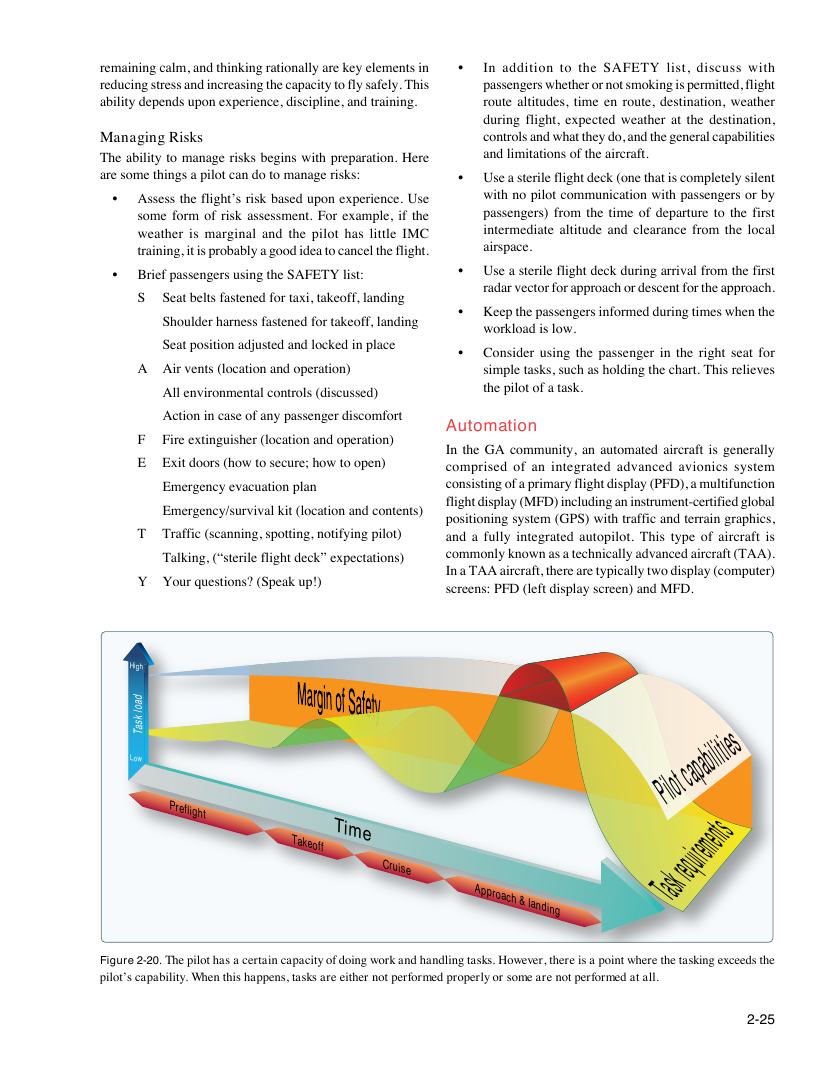
Figure 2-20. The pilot has a certain capacity of doing work and handling tasks. However, there is a point where the tasking exceeds the
pilot’s capability. When this happens, tasks are either not performed properly or some are not performed at all.
2-25
P r e f lig h t
T a k e o f f
C r u is e
Time
Approach
& landing
daol
ksaT
remaining calm, and thinking rationally are key elements in • In addition to the SAFETY list, discuss with
reducing stress and increasing the capacity to fly safely. This passengers whether or not smoking is permitted, flight
ability depends upon experience, discipline, and training. route altitudes, time en route, destination, weather
during flight, expected weather at the destination,
Managing Risks controls and what they do, and the general capabilities
The ability to manage risks begins with preparation. Here and limitations of the aircraft.
are some things a pilot can do to manage risks: • Use a sterile flight deck (one that is completely silent
• Assess the flight’s risk based upon experience. Use with no pilot communication with passengers or by
some form of risk assessment. For example, if the passengers) from the time of departure to the first
weather is marginal and the pilot has little IMC intermediate altitude and clearance from the local
training, it is probably a good idea to cancel the flight. airspace.
• Brief passengers using the SAFETY list: • Use a sterile flight deck during arrival from the first
radar vector for approach or descent for the approach.
S Seat belts fastened for taxi, takeoff, landing
• Keep the passengers informed during times when the
Shoulder harness fastened for takeoff, landing
workload is low.
Seat position adjusted and locked in place
• Consider using the passenger in the right seat for
A Air vents (location and operation) simple tasks, such as holding the chart. This relieves
the pilot of a task.
All environmental controls (discussed)
Action in case of any passenger discomfort
Automation
F Fire extinguisher (location and operation)
In the GA community, an automated aircraft is generally
E Exit doors (how to secure; how to open) comprised of an integrated advanced avionics system
Emergency evacuation plan consisting of a primary flight display (PFD), a multifunction
flight display (MFD) including an instrument-certified global
Emergency/survival kit (location and contents)
positioning system (GPS) with traffic and terrain graphics,
T Traffic (scanning, spotting, notifying pilot) and a fully integrated autopilot. This type of aircraft is
Talking, (“sterile flight deck” expectations) commonly known as a technically advanced aircraft (TAA).
In a TAA aircraft, there are typically two display (computer)
Y Your questions? (Speak up!)
screens: PFD (left display screen) and MFD.
High
bilities
Low
ot
ca
pa
Pil
s nt
e
m e uir
q
e k r
s
a
T