FAA-H-8083-25C · Source PDF page 104
Aerodynamics of Flight
Induced Drag · PHAK page 5-7
Searchable transcription
The airflow outside of the boundary layer reacts to the
shape of the edge of the boundary layer just as it would
to the physical surface of an object. The boundary layer
gives any object an “effective” shape that is usually slightly
different from the physical shape. The boundary layer may
also separate from the body, thus creating an effective shape
much different from the physical shape of the object. This
change in the physical shape of the boundary layer causes a
dramatic decrease in lift and an increase in drag. When this
happens, the airfoil has stalled.
In order to reduce the effect of skin friction drag, aircraft
designers utilize flush mount rivets and remove any
irregularities that may protrude above the wing surface. In
addition, a smooth and glossy finish aids in transition of
air across the surface of the wing. Since dirt on an aircraft
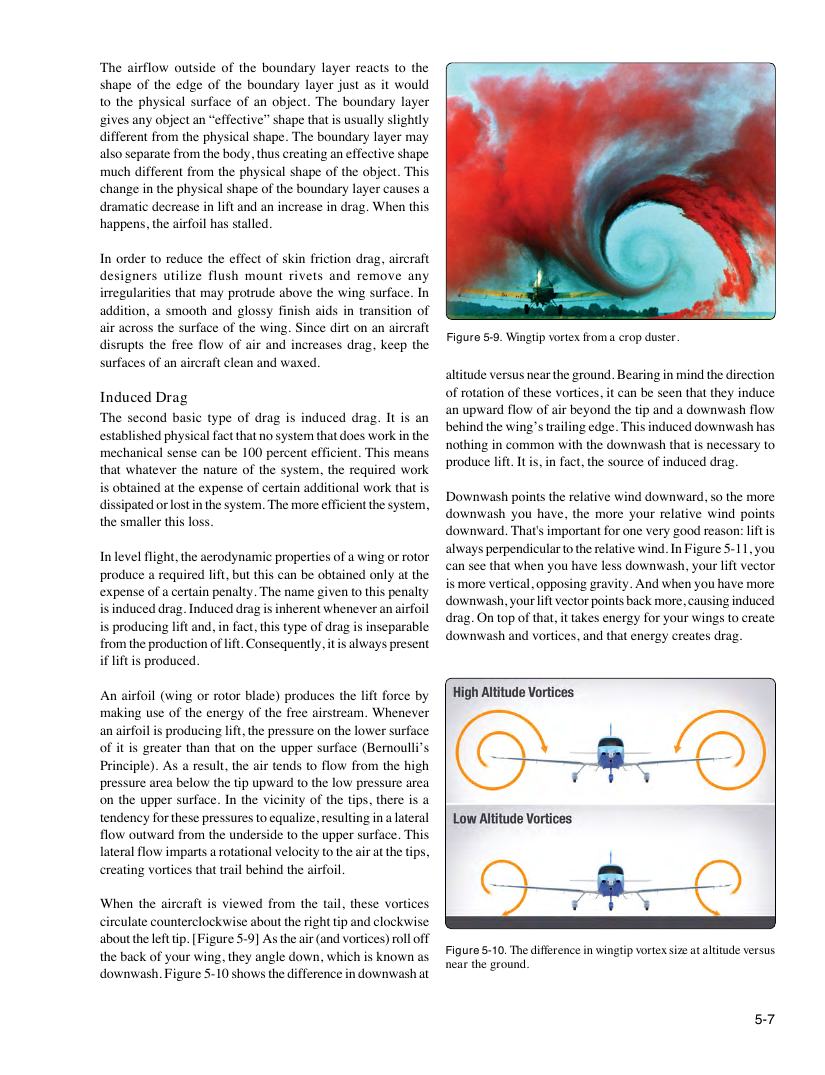
Figure 5-9. Wingtip vortex from a crop duster.
disrupts the free flow of air and increases drag, keep the
surfaces of an aircraft clean and waxed.
altitude versus near the ground. Bearing in mind the direction
of rotation of these vortices, it can be seen that they induce
Induced Drag
an upward flow of air beyond the tip and a downwash flow
The second basic type of drag is induced drag. It is an
behind the wing’s trailing edge. This induced downwash has
established physical fact that no system that does work in the
nothing in common with the downwash that is necessary to
mechanical sense can be 100 percent efficient. This means
produce lift. It is, in fact, the source of induced drag.
that whatever the nature of the system, the required work
is obtained at the expense of certain additional work that is
Downwash points the relative wind downward, so the more
dissipated or lost in the system. The more efficient the system,
downwash you have, the more your relative wind points
the smaller this loss.
downward. That's important for one very good reason: lift is
always perpendicular to the relative wind. In Figure 5-11, you
In level flight, the aerodynamic properties of a wing or rotor
can see that when you have less downwash, your lift vector
produce a required lift, but this can be obtained only at the
is more vertical, opposing gravity. And when you have more
expense of a certain penalty. The name given to this penalty
downwash, your lift vector points back more, causing induced
is induced drag. Induced drag is inherent whenever an airfoil
drag. On top of that, it takes energy for your wings to create
is producing lift and, in fact, this type of drag is inseparable
downwash and vortices, and that energy creates drag.
from the production of lift. Consequently, it is always present
if lift is produced.
An airfoil (wing or rotor blade) produces the lift force by
making use of the energy of the free airstream. Whenever
an airfoil is producing lift, the pressure on the lower surface
of it is greater than that on the upper surface (Bernoulli’s
Principle). As a result, the air tends to flow from the high
pressure area below the tip upward to the low pressure area
on the upper surface. In the vicinity of the tips, there is a
tendency for these pressures to equalize, resulting in a lateral
flow outward from the underside to the upper surface. This
lateral flow imparts a rotational velocity to the air at the tips,
creating vortices that trail behind the airfoil.
When the aircraft is viewed from the tail, these vortices
circulate counterclockwise about the right tip and clockwise
about the left tip. [Figure 5-9] As the air (and vortices) roll off
the back of your wing, they angle down, which is known as Figure 5-10. The difference in wingtip vortex size at altitude versus
near the ground.
downwash. Figure 5-10 shows the difference in downwash at
5-7