FAA-H-8083-25C · Source PDF page 114
Aerodynamics of Flight
Lateral Stability (Rolling) · PHAK page 5-17
Searchable transcription
Cruise power
Idle power
Full power
Thrust CG
Below center of gravity
Thrust CG
Through center of gravity
Thrust
CG
Above center of gravity
Figure 5-26. Thrust line affects longitudinal stability.
5-17
Lift
Thrust CG
Lift
Thrust CG
Lift
As this climb continues, the airspeed again decreases, causing
the downward force on the tail to decrease until the nose
lowers once more. Because the aircraft is dynamically stable,
the nose does not lower as far this time as it did before. The
aircraft acquires enough speed in this more gradual dive to
start it into another climb, but the climb is not as steep as
the preceding one.
After several of these diminishing oscillations, in which
the nose alternately rises and lowers, the aircraft finally
settles down to a speed at which the downward force on the
tail exactly counteracts the tendency of the aircraft to dive.
When this condition is attained, the aircraft is once again in
balanced flight and continues in stabilized flight as long as
this attitude and airspeed are not changed.
A similar effect is noted upon closing the throttle. The
downwash of the wings is reduced and the force at T in
Thrust CG
Figure 5-23 is not enough to hold the horizontal stabilizer
down. It seems as if the force at T on the lever were allowing
the force of gravity to pull the nose down. This is a desirable
characteristic because the aircraft is inherently trying to
regain airspeed and reestablish the proper balance.
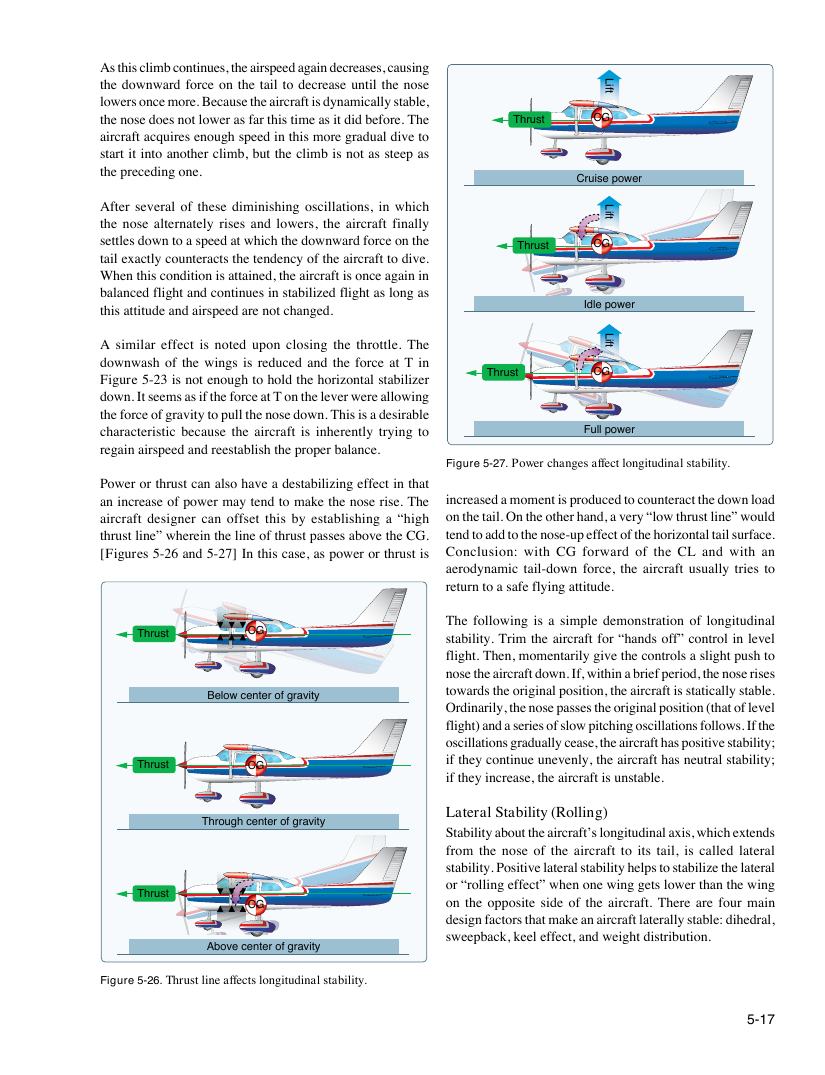
Figure 5-27. Power changes affect longitudinal stability.
Power or thrust can also have a destabilizing effect in that
an increase of power may tend to make the nose rise. The increased a moment is produced to counteract the down load
aircraft designer can offset this by establishing a “high on the tail. On the other hand, a very “low thrust line” would
thrust line” wherein the line of thrust passes above the CG. tend to add to the nose-up effect of the horizontal tail surface.
[Figures 5-26 and 5-27] In this case, as power or thrust is Conclusion: with CG forward of the CL and with an
aerodynamic tail-down force, the aircraft usually tries to
return to a safe flying attitude.
The following is a simple demonstration of longitudinal
stability. Trim the aircraft for “hands off” control in level
flight. Then, momentarily give the controls a slight push to
nose the aircraft down. If, within a brief period, the nose rises
towards the original position, the aircraft is statically stable.
Ordinarily, the nose passes the original position (that of level
flight) and a series of slow pitching oscillations follows. If the
oscillations gradually cease, the aircraft has positive stability;
if they continue unevenly, the aircraft has neutral stability;
if they increase, the aircraft is unstable.
Lateral Stability (Rolling)
Stability about the aircraft’s longitudinal axis, which extends
from the nose of the aircraft to its tail, is called lateral
stability. Positive lateral stability helps to stabilize the lateral
or “rolling effect” when one wing gets lower than the wing
on the opposite side of the aircraft. There are four main
design factors that make an aircraft laterally stable: dihedral,
sweepback, keel effect, and weight distribution.