FAA-H-8083-25C · Source PDF page 113
Aerodynamics of Flight
Longitudinal Stability (Pitching) · PHAK page 5-16
Searchable transcription
GC
GC
CL
CL
Cruise Speed
CG
Balanced tail load
Low Speed
CG
Lesser downward tail load
High Speed
CG
Greater downward tail load
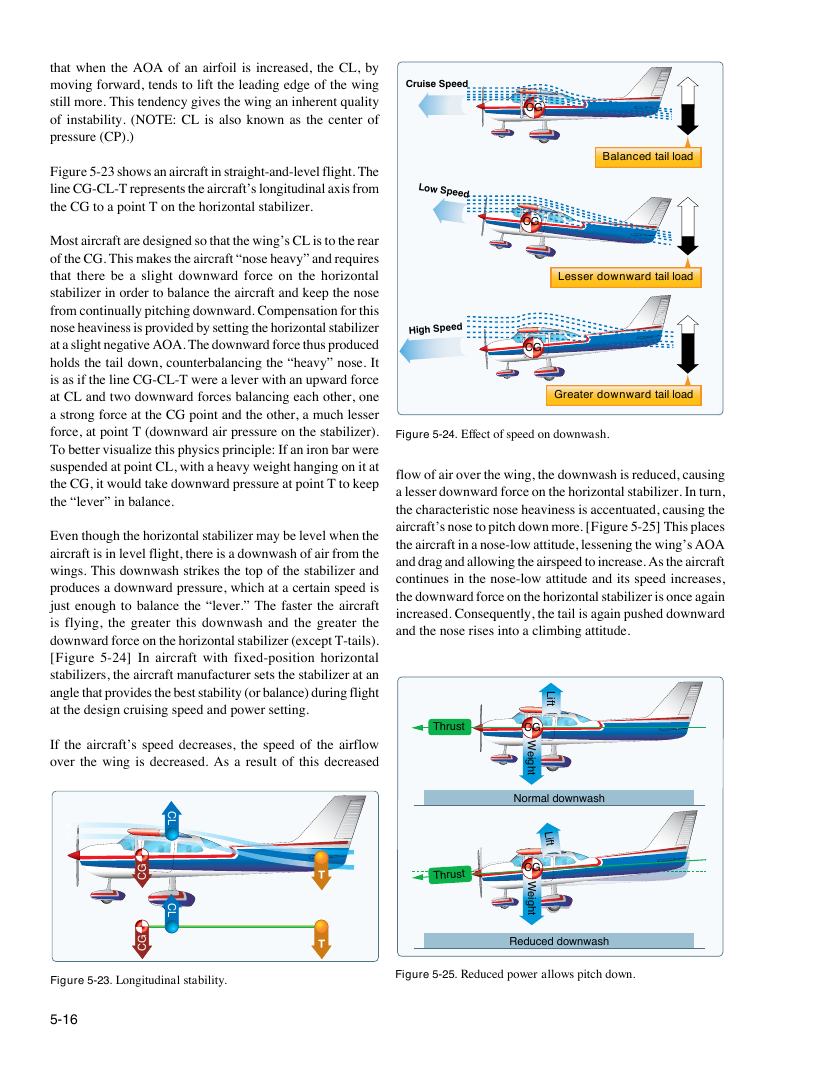
Figure 5-24. Effect of speed on downwash.
Thrust
Normal downwash
Reduced downwash
Figure 5-23. Longitudinal stability.
Weight
CG
Lift
Thrust
Weight
that when the AOA of an airfoil is increased, the CL, by
moving forward, tends to lift the leading edge of the wing
still more. This tendency gives the wing an inherent quality
of instability. (NOTE: CL is also known as the center of
pressure (CP).)
Figure 5-23 shows an aircraft in straight-and-level flight. The
line CG-CL-T represents the aircraft’s longitudinal axis from
the CG to a point T on the horizontal stabilizer.
Most aircraft are designed so that the wing’s CL is to the rear
of the CG. This makes the aircraft “nose heavy” and requires
that there be a slight downward force on the horizontal
stabilizer in order to balance the aircraft and keep the nose
from continually pitching downward. Compensation for this
nose heaviness is provided by setting the horizontal stabilizer
at a slight negative AOA. The downward force thus produced
holds the tail down, counterbalancing the “heavy” nose. It
is as if the line CG-CL-T were a lever with an upward force
at CL and two downward forces balancing each other, one
a strong force at the CG point and the other, a much lesser
force, at point T (downward air pressure on the stabilizer).
To better visualize this physics principle: If an iron bar were
suspended at point CL, with a heavy weight hanging on it at
flow of air over the wing, the downwash is reduced, causing
the CG, it would take downward pressure at point T to keep
a lesser downward force on the horizontal stabilizer. In turn,
the “lever” in balance.
the characteristic nose heaviness is accentuated, causing the
aircraft’s nose to pitch down more. [Figure 5-25] This places
Even though the horizontal stabilizer may be level when the
the aircraft in a nose-low attitude, lessening the wing’s AOA
aircraft is in level flight, there is a downwash of air from the
and drag and allowing the airspeed to increase. As the aircraft
wings. This downwash strikes the top of the stabilizer and
continues in the nose-low attitude and its speed increases,
produces a downward pressure, which at a certain speed is
the downward force on the horizontal stabilizer is once again
just enough to balance the “lever.” The faster the aircraft
increased. Consequently, the tail is again pushed downward
is flying, the greater this downwash and the greater the
and the nose rises into a climbing attitude.
downward force on the horizontal stabilizer (except T-tails).
[Figure 5-24] In aircraft with fixed-position horizontal
stabilizers, the aircraft manufacturer sets the stabilizer at an
angle that provides the best stability (or balance) during flight
at the design cruising speed and power setting.
If the aircraft’s speed decreases, the speed of the airflow
over the wing is decreased. As a result of this decreased
L
ift
CG
Figure 5-25. Reduced power allows pitch down.