FAA-H-8083-25C · Source PDF page 155
Flight Controls
Stabilator · PHAK page 6-7
Searchable transcription
Antiservo tab
Down spring
Stabilator
Pivot points
Elevator Balance weight Pivot point
Bell crank
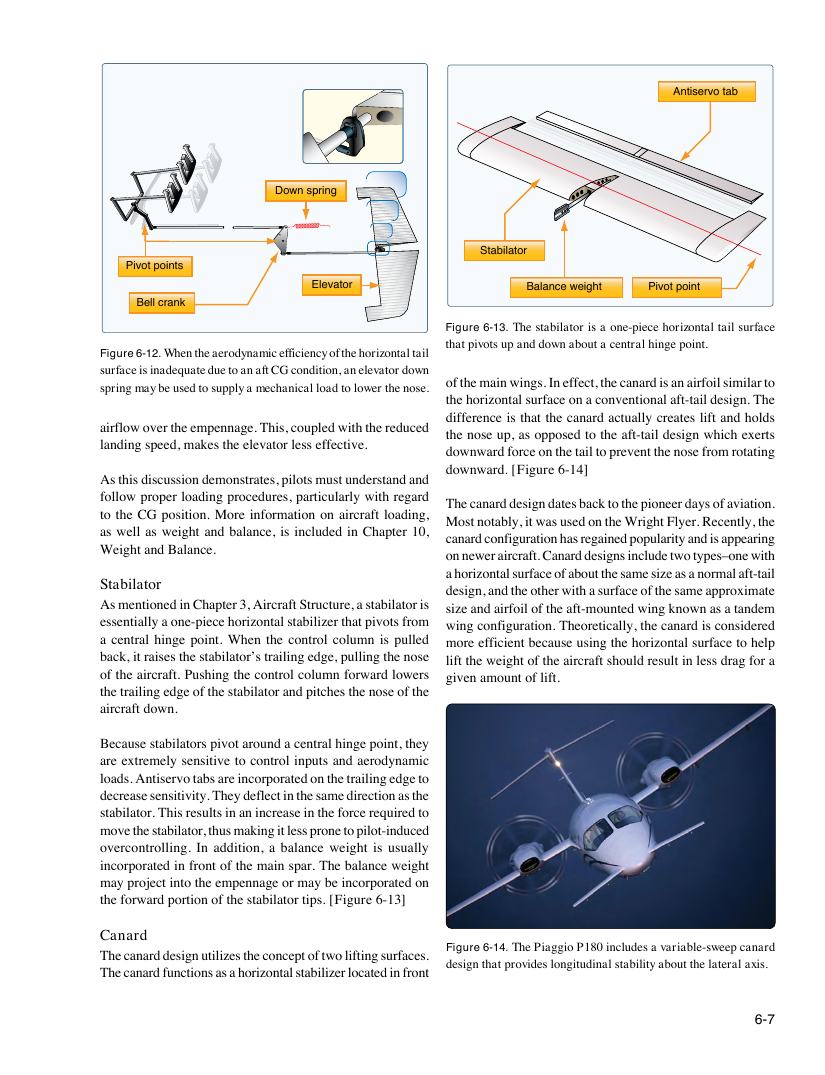
Figure 6-13. The stabilator is a one-piece horizontal tail surface
that pivots up and down about a central hinge point.
Figure 6-12. When the aerodynamic efficiency of the horizontal tail
surface is inadequate due to an aft CG condition, an elevator down
of the main wings. In effect, the canard is an airfoil similar to
spring may be used to supply a mechanical load to lower the nose.
the horizontal surface on a conventional aft-tail design. The
difference is that the canard actually creates lift and holds
airflow over the empennage. This, coupled with the reduced
the nose up, as opposed to the aft-tail design which exerts
landing speed, makes the elevator less effective.
downward force on the tail to prevent the nose from rotating
downward. [Figure 6-14]
As this discussion demonstrates, pilots must understand and
follow proper loading procedures, particularly with regard
The canard design dates back to the pioneer days of aviation.
to the CG position. More information on aircraft loading,
Most notably, it was used on the Wright Flyer. Recently, the
as well as weight and balance, is included in Chapter 10,
canard configuration has regained popularity and is appearing
Weight and Balance.
on newer aircraft. Canard designs include two types–one with
a horizontal surface of about the same size as a normal aft-tail
Stabilator
design, and the other with a surface of the same approximate
As mentioned in Chapter 3, Aircraft Structure, a stabilator is size and airfoil of the aft-mounted wing known as a tandem
essentially a one-piece horizontal stabilizer that pivots from wing configuration. Theoretically, the canard is considered
a central hinge point. When the control column is pulled more efficient because using the horizontal surface to help
back, it raises the stabilator’s trailing edge, pulling the nose lift the weight of the aircraft should result in less drag for a
of the aircraft. Pushing the control column forward lowers given amount of lift.
the trailing edge of the stabilator and pitches the nose of the
aircraft down.
Because stabilators pivot around a central hinge point, they
are extremely sensitive to control inputs and aerodynamic
loads. Antiservo tabs are incorporated on the trailing edge to
decrease sensitivity. They deflect in the same direction as the
stabilator. This results in an increase in the force required to
move the stabilator, thus making it less prone to pilot-induced
overcontrolling. In addition, a balance weight is usually
incorporated in front of the main spar. The balance weight
may project into the empennage or may be incorporated on
the forward portion of the stabilator tips. [Figure 6-13]
Canard
Figure 6-14. The Piaggio P180 includes a variable-sweep canard
The canard design utilizes the concept of two lifting surfaces.
design that provides longitudinal stability about the lateral axis.
The canard functions as a horizontal stabilizer located in front
6-7