FAA-H-8083-25C · Source PDF page 234
Flight Manuals and Other Documents
Flight Limits · PHAK page 9-4
Searchable transcription
Flight Limits Manufacturers may include an optional subsection
Flight Limits list authorized maneuvers with appropriate entitled Abnormal Procedures. This subsection describes
entry speeds, flight load factor limits, and types of operation recommended procedures for handling malfunctions that are
limits. It also indicates those maneuvers that are prohibited, not considered emergencies.
such as spins or acrobatic flight, as well as operational
limitations such as flight into known icing conditions. Normal Procedures (Section 4)
This section begins with a list of the airspeeds for normal
Placards operations. The next area consists of several checklists that
may include preflight inspection, before starting procedures,
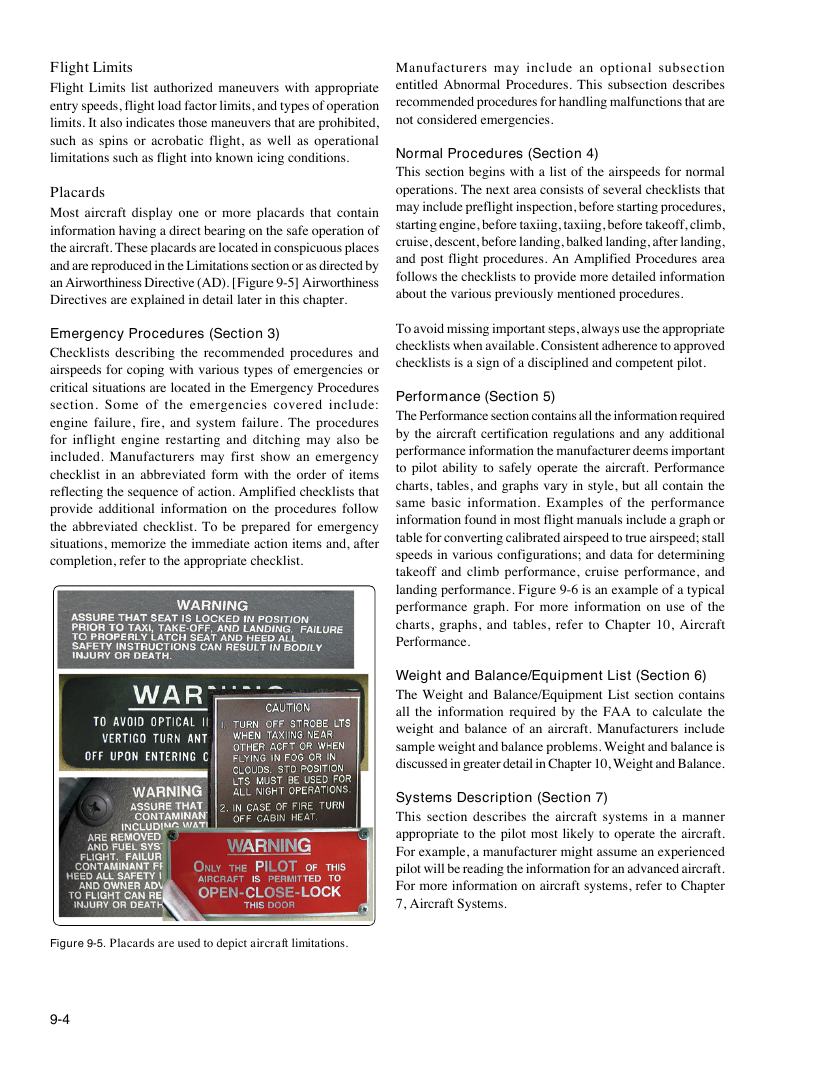
Most aircraft display one or more placards that contain
starting engine, before taxiing, taxiing, before takeoff, climb,
information having a direct bearing on the safe operation of
cruise, descent, before landing, balked landing, after landing,
the aircraft. These placards are located in conspicuous places
and post flight procedures. An Amplified Procedures area
and are reproduced in the Limitations section or as directed by
follows the checklists to provide more detailed information
an Airworthiness Directive (AD). [Figure 9-5] Airworthiness
about the various previously mentioned procedures.
Directives are explained in detail later in this chapter.
To avoid missing important steps, always use the appropriate
Emergency Procedures (Section 3)
checklists when available. Consistent adherence to approved
Checklists describing the recommended procedures and
checklists is a sign of a disciplined and competent pilot.
airspeeds for coping with various types of emergencies or
critical situations are located in the Emergency Procedures
Performance (Section 5)
section. Some of the emergencies covered include:
The Performance section contains all the information required
engine failure, fire, and system failure. The procedures
by the aircraft certification regulations and any additional
for inflight engine restarting and ditching may also be
performance information the manufacturer deems important
included. Manufacturers may first show an emergency
to pilot ability to safely operate the aircraft. Performance
checklist in an abbreviated form with the order of items
charts, tables, and graphs vary in style, but all contain the
reflecting the sequence of action. Amplified checklists that
same basic information. Examples of the performance
provide additional information on the procedures follow
information found in most flight manuals include a graph or
the abbreviated checklist. To be prepared for emergency
table for converting calibrated airspeed to true airspeed; stall
situations, memorize the immediate action items and, after
speeds in various configurations; and data for determining
completion, refer to the appropriate checklist.
takeoff and climb performance, cruise performance, and
landing performance. Figure 9-6 is an example of a typical
performance graph. For more information on use of the
charts, graphs, and tables, refer to Chapter 10, Aircraft
Performance.
Weight and Balance/Equipment List (Section 6)
The Weight and Balance/Equipment List section contains
all the information required by the FAA to calculate the
weight and balance of an aircraft. Manufacturers include
sample weight and balance problems. Weight and balance is
discussed in greater detail in Chapter 10, Weight and Balance.
Systems Description (Section 7)
This section describes the aircraft systems in a manner
appropriate to the pilot most likely to operate the aircraft.
For example, a manufacturer might assume an experienced
pilot will be reading the information for an advanced aircraft.
For more information on aircraft systems, refer to Chapter
7, Aircraft Systems.
Figure 9-5. Placards are used to depict aircraft limitations.
9-4