FAA-H-8083-25C · Source PDF page 307
Weather Theory
Squall Line · PHAK page 12-23
Searchable transcription
Cumulus Stage (3–5 mile height) Mature Stage (5–10 mile height) Dissipating Stage (5–7 mile height)
40,000 ft.
Equilibrium level
30,000 ft.
20,000 ft.
0 °C
32 °F
10,000 ft.
5,000 ft.
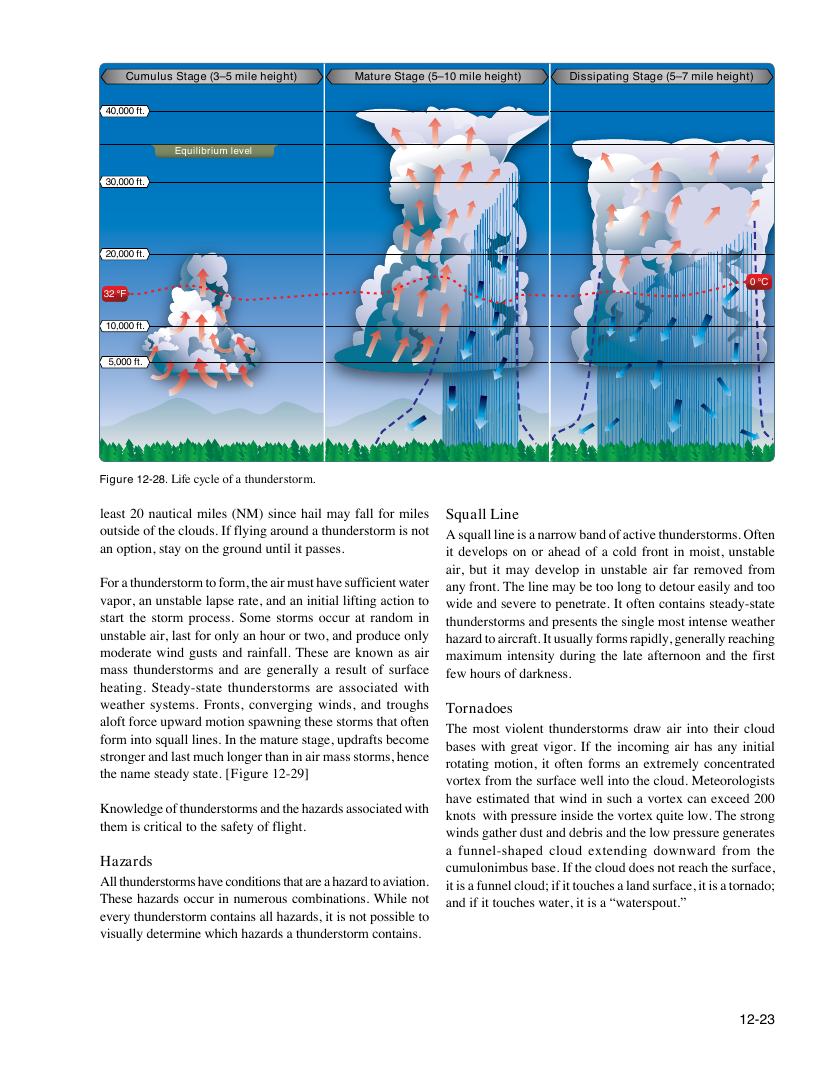
Figure 12-28. Life cycle of a thunderstorm.
least 20 nautical miles (NM) since hail may fall for miles Squall Line
outside of the clouds. If flying around a thunderstorm is not A squall line is a narrow band of active thunderstorms. Often
an option, stay on the ground until it passes. it develops on or ahead of a cold front in moist, unstable
air, but it may develop in unstable air far removed from
For a thunderstorm to form, the air must have sufficient water any front. The line may be too long to detour easily and too
vapor, an unstable lapse rate, and an initial lifting action to wide and severe to penetrate. It often contains steady-state
start the storm process. Some storms occur at random in thunderstorms and presents the single most intense weather
unstable air, last for only an hour or two, and produce only hazard to aircraft. It usually forms rapidly, generally reaching
moderate wind gusts and rainfall. These are known as air maximum intensity during the late afternoon and the first
mass thunderstorms and are generally a result of surface few hours of darkness.
heating. Steady-state thunderstorms are associated with
weather systems. Fronts, converging winds, and troughs Tornadoes
aloft force upward motion spawning these storms that often
The most violent thunderstorms draw air into their cloud
form into squall lines. In the mature stage, updrafts become
bases with great vigor. If the incoming air has any initial
stronger and last much longer than in air mass storms, hence
rotating motion, it often forms an extremely concentrated
the name steady state. [Figure 12-29]
vortex from the surface well into the cloud. Meteorologists
have estimated that wind in such a vortex can exceed 200
Knowledge of thunderstorms and the hazards associated with
knots with pressure inside the vortex quite low. The strong
them is critical to the safety of flight.
winds gather dust and debris and the low pressure generates
a funnel-shaped cloud extending downward from the
Hazards
cumulonimbus base. If the cloud does not reach the surface,
All thunderstorms have conditions that are a hazard to aviation. it is a funnel cloud; if it touches a land surface, it is a tornado;
These hazards occur in numerous combinations. While not and if it touches water, it is a “waterspout.”
every thunderstorm contains all hazards, it is not possible to
visually determine which hazards a thunderstorm contains.
12-23