FAA-H-8083-25C · Source PDF page 285
Weather Theory
Weather Theory · PHAK page 12-1
Searchable transcription
Chapter 12
Weather Theory
Introduction
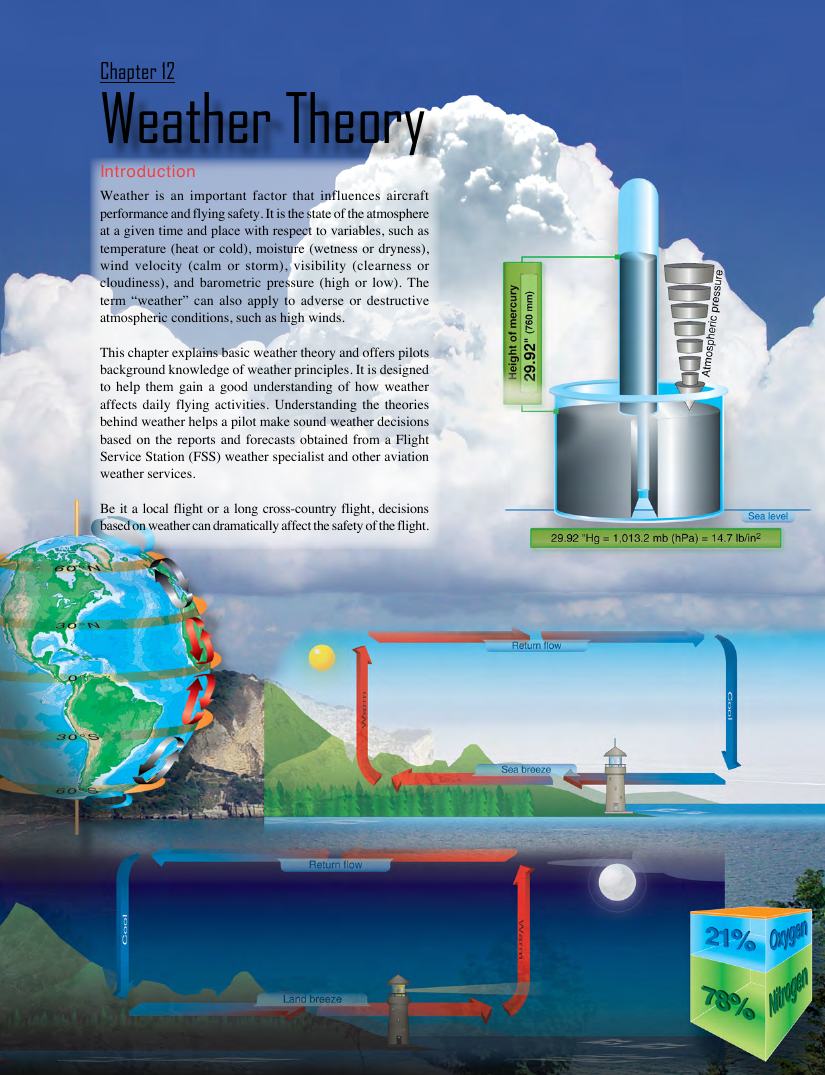
Weather is an important factor that influences aircraft
performance and flying safety. It is the state of the atmosphere
at a given time and place with respect to variables, such as
temperature (heat or cold), moisture (wetness or dryness),
wind velocity (calm or storm), visibility (clearness or
cloudiness), and barometric pressure (high or low). The
term “weather” can also apply to adverse or destructive
atmospheric conditions, such as high winds.
This chapter explains basic weather theory and offers pilots
background knowledge of weather principles. It is designed
to help them gain a good understanding of how weather
affects daily flying activities. Understanding the theories
behind weather helps a pilot make sound weather decisions
based on the reports and forecasts obtained from a Flight
Service Station (FSS) weather specialist and other aviation
weather services.
Be it a local flight or a long cross-country flight, decisions
based on weather can dramatically affect the safety of the flight.
12-1