FAA-H-8083-25C · Source PDF page 291
Weather Theory
Wind and Currents · PHAK page 12-7
Searchable transcription
percent is life sustaining atmospheric oxygen. At sea level,
atmospheric pressure is great enough to support normal
growth, activity, and life. By 18,000 feet, the partial pressure
of oxygen is reduced and adversely affects the normal
activities and functions of the human body.
The reactions of the average person become impaired at an
altitude of about 10,000 feet, but for some people impairment
can occur at an altitude as low as 5,000 feet. The physiological
reactions to hypoxia or oxygen deprivation are insidious and
affect people in different ways. These symptoms range from
mild disorientation to total incapacitation, depending on
body tolerance and altitude. Supplemental oxygen or cabin
pressurization systems help pilots fly at higher altitudes and
overcome the effects of oxygen deprivation.
Wind and Currents
Air flows from areas of high pressure into areas of low
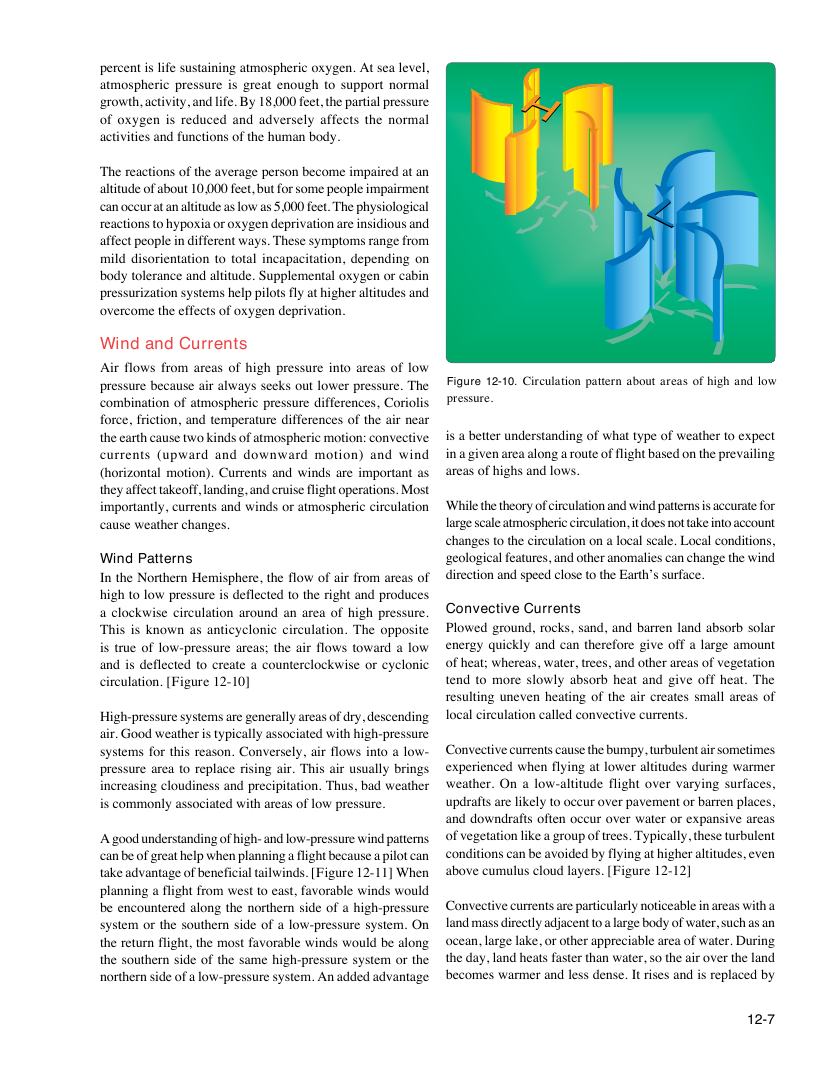
pressure because air always seeks out lower pressure. The Figure 12-10. Circulation pattern about areas of high and low
combination of atmospheric pressure differences, Coriolis pressure.
force, friction, and temperature differences of the air near
the earth cause two kinds of atmospheric motion: convective is a better understanding of what type of weather to expect
currents (upward and downward motion) and wind in a given area along a route of flight based on the prevailing
(horizontal motion). Currents and winds are important as areas of highs and lows.
they affect takeoff, landing, and cruise flight operations. Most
importantly, currents and winds or atmospheric circulation While the theory of circulation and wind patterns is accurate for
cause weather changes. large scale atmospheric circulation, it does not take into account
changes to the circulation on a local scale. Local conditions,
Wind Patterns geological features, and other anomalies can change the wind
In the Northern Hemisphere, the flow of air from areas of direction and speed close to the Earth’s surface.
high to low pressure is deflected to the right and produces
a clockwise circulation around an area of high pressure. Convective Currents
This is known as anticyclonic circulation. The opposite Plowed ground, rocks, sand, and barren land absorb solar
is true of low-pressure areas; the air flows toward a low energy quickly and can therefore give off a large amount
and is deflected to create a counterclockwise or cyclonic of heat; whereas, water, trees, and other areas of vegetation
circulation. [Figure 12-10] tend to more slowly absorb heat and give off heat. The
resulting uneven heating of the air creates small areas of
High-pressure systems are generally areas of dry, descending local circulation called convective currents.
air. Good weather is typically associated with high-pressure
systems for this reason. Conversely, air flows into a low- Convective currents cause the bumpy, turbulent air sometimes
pressure area to replace rising air. This air usually brings experienced when flying at lower altitudes during warmer
increasing cloudiness and precipitation. Thus, bad weather weather. On a low-altitude flight over varying surfaces,
is commonly associated with areas of low pressure. updrafts are likely to occur over pavement or barren places,
and downdrafts often occur over water or expansive areas
A good understanding of high- and low-pressure wind patterns of vegetation like a group of trees. Typically, these turbulent
can be of great help when planning a flight because a pilot can conditions can be avoided by flying at higher altitudes, even
take advantage of beneficial tailwinds. [Figure 12-11] When above cumulus cloud layers. [Figure 12-12]
planning a flight from west to east, favorable winds would
be encountered along the northern side of a high-pressure Convective currents are particularly noticeable in areas with a
system or the southern side of a low-pressure system. On land mass directly adjacent to a large body of water, such as an
the return flight, the most favorable winds would be along ocean, large lake, or other appreciable area of water. During
the southern side of the same high-pressure system or the the day, land heats faster than water, so the air over the land
northern side of a low-pressure system. An added advantage becomes warmer and less dense. It rises and is replaced by
12-7