FAA-H-8083-25C · Source PDF page 356
Airport Operations
Radio Communications · PHAK page 14-22
Searchable transcription
LEGEND
Recommended standard left-hand traffic
pattern (depicted) (standard right-hand
traffic pattern would be mirror image)
Downwind
Final Departure
RUNWAY
14-22
esaB
dniwssorC
Application of traffic
pattern indicators ntr y
E
1
2
ure
Segmented circle De
part
5
6
3 4 6 Departure
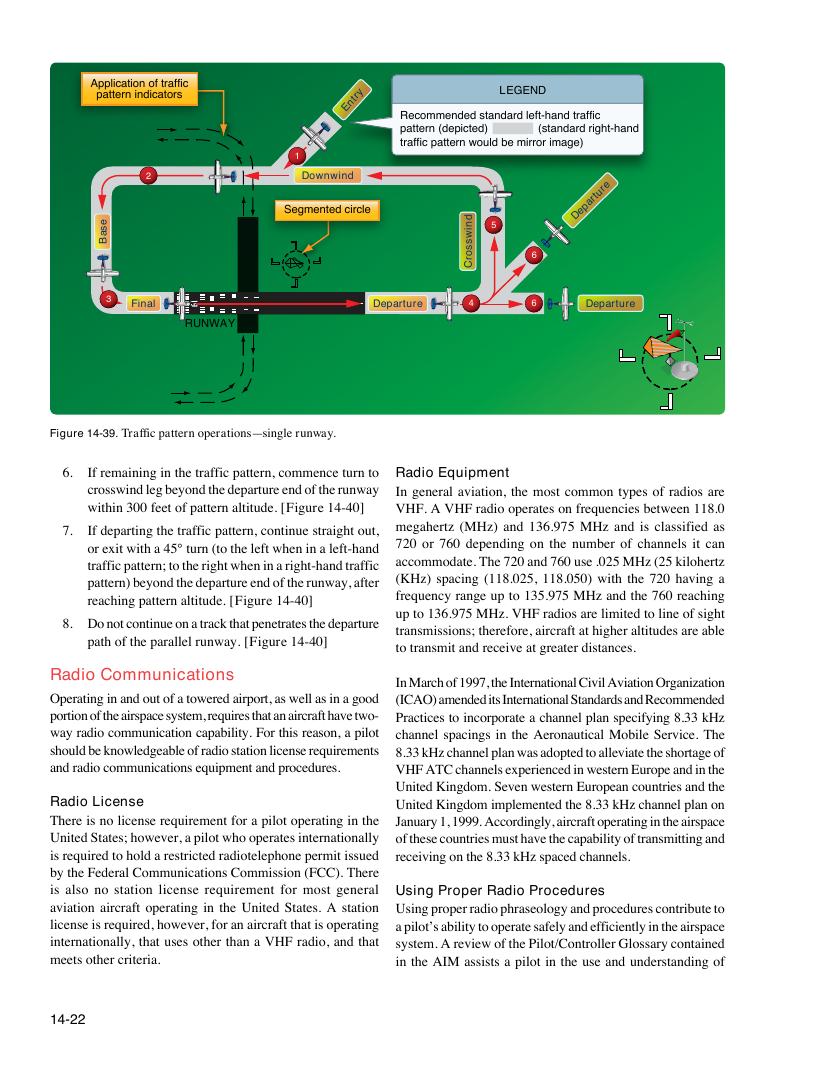
Figure 14-39. Traffic pattern operations—single runway.
6. If remaining in the traffic pattern, commence turn to Radio Equipment
crosswind leg beyond the departure end of the runway In general aviation, the most common types of radios are
within 300 feet of pattern altitude. [Figure 14-40] VHF. A VHF radio operates on frequencies between 118.0
megahertz (MHz) and 136.975 MHz and is classified as
7. If departing the traffic pattern, continue straight out,
720 or 760 depending on the number of channels it can
or exit with a 45° turn (to the left when in a left-hand
accommodate. The 720 and 760 use .025 MHz (25 kilohertz
traffic pattern; to the right when in a right-hand traffic
(KHz) spacing (118.025, 118.050) with the 720 having a
pattern) beyond the departure end of the runway, after
frequency range up to 135.975 MHz and the 760 reaching
reaching pattern altitude. [Figure 14-40]
up to 136.975 MHz. VHF radios are limited to line of sight
8. Do not continue on a track that penetrates the departure
transmissions; therefore, aircraft at higher altitudes are able
path of the parallel runway. [Figure 14-40]
to transmit and receive at greater distances.
Radio Communications
In March of 1997, the International Civil Aviation Organization
Operating in and out of a towered airport, as well as in a good (ICAO) amended its International Standards and Recommended
portion of the airspace system, requires that an aircraft have two- Practices to incorporate a channel plan specifying 8.33 kHz
way radio communication capability. For this reason, a pilot channel spacings in the Aeronautical Mobile Service. The
should be knowledgeable of radio station license requirements 8.33 kHz channel plan was adopted to alleviate the shortage of
and radio communications equipment and procedures. VHF ATC channels experienced in western Europe and in the
United Kingdom. Seven western European countries and the
Radio License United Kingdom implemented the 8.33 kHz channel plan on
There is no license requirement for a pilot operating in the January 1, 1999. Accordingly, aircraft operating in the airspace
United States; however, a pilot who operates internationally of these countries must have the capability of transmitting and
is required to hold a restricted radiotelephone permit issued receiving on the 8.33 kHz spaced channels.
by the Federal Communications Commission (FCC). There
is also no station license requirement for most general Using Proper Radio Procedures
aviation aircraft operating in the United States. A station Using proper radio phraseology and procedures contribute to
license is required, however, for an aircraft that is operating a pilot’s ability to operate safely and efficiently in the airspace
internationally, that uses other than a VHF radio, and that system. A review of the Pilot/Controller Glossary contained
meets other criteria. in the AIM assists a pilot in the use and understanding of