FAA-H-8083-25C · Source PDF page 384
Airspace
Operating Rules and Pilot/Equipment Requirements · PHAK page 15-9
Searchable transcription
Pilots also comply with very strict FAA general operating 2. A recreational pilot certificate and all requirements
and flight rules as outlined in the CFR, including the FAA’s contained within 14 CFR part 61, section 61.101(d), or
important “see and avoid” mandate. These regulations provide the requirements for a student pilot seeking a recreational
the historical foundation of the FAA regulations governing pilot certificate in 14 CFR part 61, section 61.94.
the aviation system and the individual classes of airspace.
3. A sport pilot certificate and all requirements contained
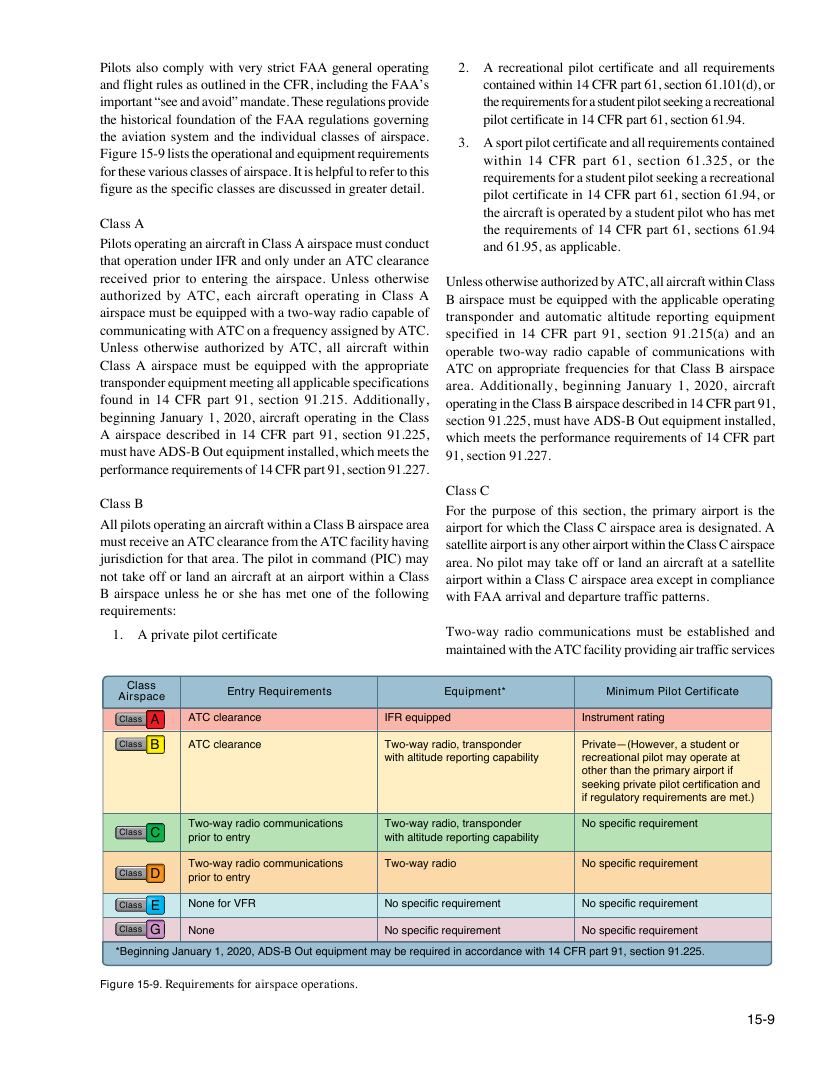
Figure 15-9 lists the operational and equipment requirements
within 14 CFR part 61, section 61.325, or the
for these various classes of airspace. It is helpful to refer to this
requirements for a student pilot seeking a recreational
figure as the specific classes are discussed in greater detail.
pilot certificate in 14 CFR part 61, section 61.94, or
the aircraft is operated by a student pilot who has met
Class A
the requirements of 14 CFR part 61, sections 61.94
Pilots operating an aircraft in Class A airspace must conduct and 61.95, as applicable.
that operation under IFR and only under an ATC clearance
received prior to entering the airspace. Unless otherwise Unless otherwise authorized by ATC, all aircraft within Class
authorized by ATC, each aircraft operating in Class A B airspace must be equipped with the applicable operating
airspace must be equipped with a two-way radio capable of transponder and automatic altitude reporting equipment
communicating with ATC on a frequency assigned by ATC. specified in 14 CFR part 91, section 91.215(a) and an
Unless otherwise authorized by ATC, all aircraft within operable two-way radio capable of communications with
Class A airspace must be equipped with the appropriate ATC on appropriate frequencies for that Class B airspace
transponder equipment meeting all applicable specifications area. Additionally, beginning January 1, 2020, aircraft
found in 14 CFR part 91, section 91.215. Additionally, operating in the Class B airspace described in 14 CFR part 91,
beginning January 1, 2020, aircraft operating in the Class section 91.225, must have ADS-B Out equipment installed,
A airspace described in 14 CFR part 91, section 91.225, which meets the performance requirements of 14 CFR part
must have ADS-B Out equipment installed, which meets the 91, section 91.227.
performance requirements of 14 CFR part 91, section 91.227.
Class C
Class B
For the purpose of this section, the primary airport is the
All pilots operating an aircraft within a Class B airspace area airport for which the Class C airspace area is designated. A
must receive an ATC clearance from the ATC facility having satellite airport is any other airport within the Class C airspace
jurisdiction for that area. The pilot in command (PIC) may area. No pilot may take off or land an aircraft at a satellite
not take off or land an aircraft at an airport within a Class airport within a Class C airspace area except in compliance
B airspace unless he or she has met one of the following with FAA arrival and departure traffic patterns.
requirements:
1. A private pilot certificate Two-way radio communications must be established and
maintained with the ATC facility providing air traffic services
Class
Entry Requirements Equipment* Minimum Pilot Certificate
Airspace
Class A ATC clearance IFR equipped Instrument rating
Class B ATC clearance Two-way radio, transponder Private—(However, a student or
with altitude reporting capability recreational pilot may operate at
other than the primary airport if
seeking private pilot certification and
if regulatory requirements are met.)
Two-way radio communications Two-way radio, transponder No specific requirement
Class C prior to entry with altitude reporting capability
Two-way radio communications Two-way radio No specific requirement
Class D prior to entry
Class E None for VFR No specific requirement No specific requirement
Class G None No specific requirement No specific requirement
*Beginning January 1, 2020, ADS-B Out equipment may be required in accordance with 14 CFR part 91, section 91.225.
Figure 15-9. Requirements for airspace operations.
15-9