FAA-H-8083-25C · Source PDF page 445
Aeromedical Factors
Dark Adaptation · PHAK page 17-23
Searchable transcription
sharpness (acuity) and color at night, depth perception and moving from one viewing point to the next, pilots should
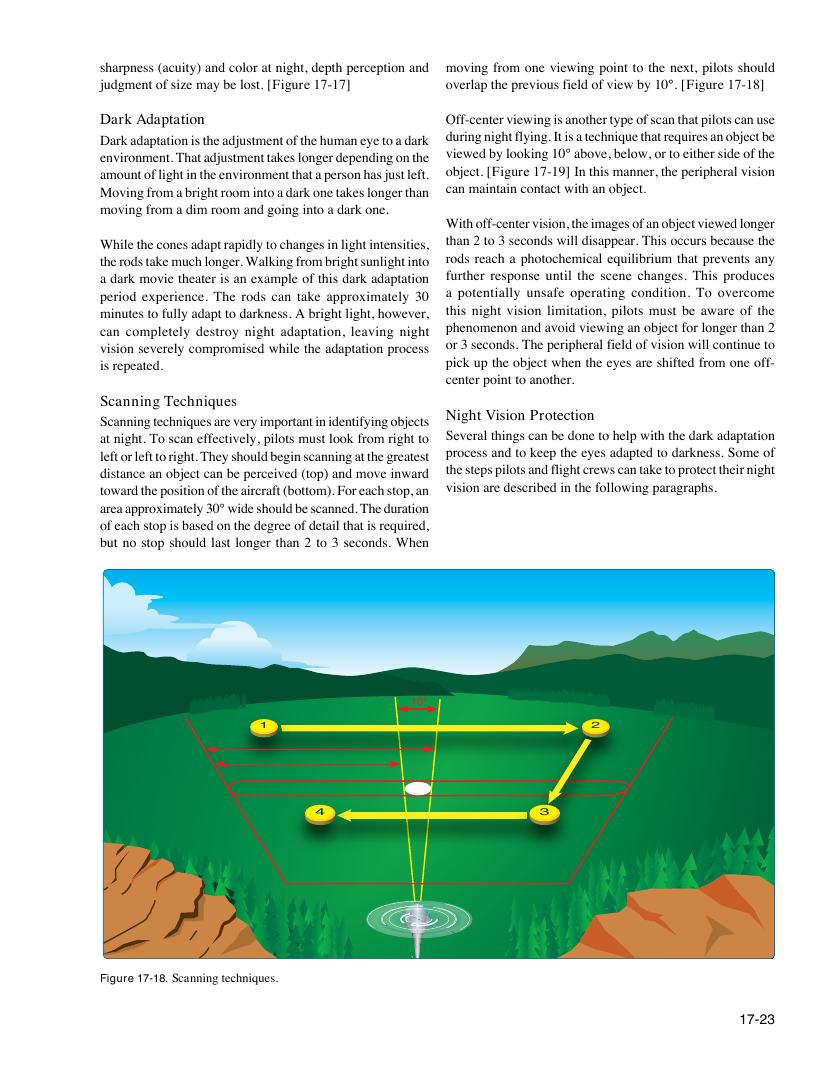
judgment of size may be lost. [Figure 17-17] overlap the previous field of view by 10°. [Figure 17-18]
Dark Adaptation Off-center viewing is another type of scan that pilots can use
Dark adaptation is the adjustment of the human eye to a dark during night flying. It is a technique that requires an object be
environment. That adjustment takes longer depending on the viewed by looking 10° above, below, or to either side of the
amount of light in the environment that a person has just left. object. [Figure 17-19] In this manner, the peripheral vision
Moving from a bright room into a dark one takes longer than can maintain contact with an object.
moving from a dim room and going into a dark one.
With off-center vision, the images of an object viewed longer
While the cones adapt rapidly to changes in light intensities, than 2 to 3 seconds will disappear. This occurs because the
the rods take much longer. Walking from bright sunlight into rods reach a photochemical equilibrium that prevents any
a dark movie theater is an example of this dark adaptation further response until the scene changes. This produces
period experience. The rods can take approximately 30 a potentially unsafe operating condition. To overcome
minutes to fully adapt to darkness. A bright light, however, this night vision limitation, pilots must be aware of the
can completely destroy night adaptation, leaving night phenomenon and avoid viewing an object for longer than 2
vision severely compromised while the adaptation process or 3 seconds. The peripheral field of vision will continue to
is repeated. pick up the object when the eyes are shifted from one off-
center point to another.
Scanning Techniques
Night Vision Protection
Scanning techniques are very important in identifying objects
at night. To scan effectively, pilots must look from right to Several things can be done to help with the dark adaptation
left or left to right. They should begin scanning at the greatest process and to keep the eyes adapted to darkness. Some of
distance an object can be perceived (top) and move inward the steps pilots and flight crews can take to protect their night
toward the position of the aircraft (bottom). For each stop, an vision are described in the following paragraphs.
area approximately 30° wide should be scanned. The duration
of each stop is based on the degree of detail that is required,
but no stop should last longer than 2 to 3 seconds. When
10°
1 2
4 3
Figure 17-18. Scanning techniques.
17-23