FAA-H-8083-25C · Source PDF page 446
Aeromedical Factors
Dark Adaptation · PHAK page 17-24
Searchable transcription
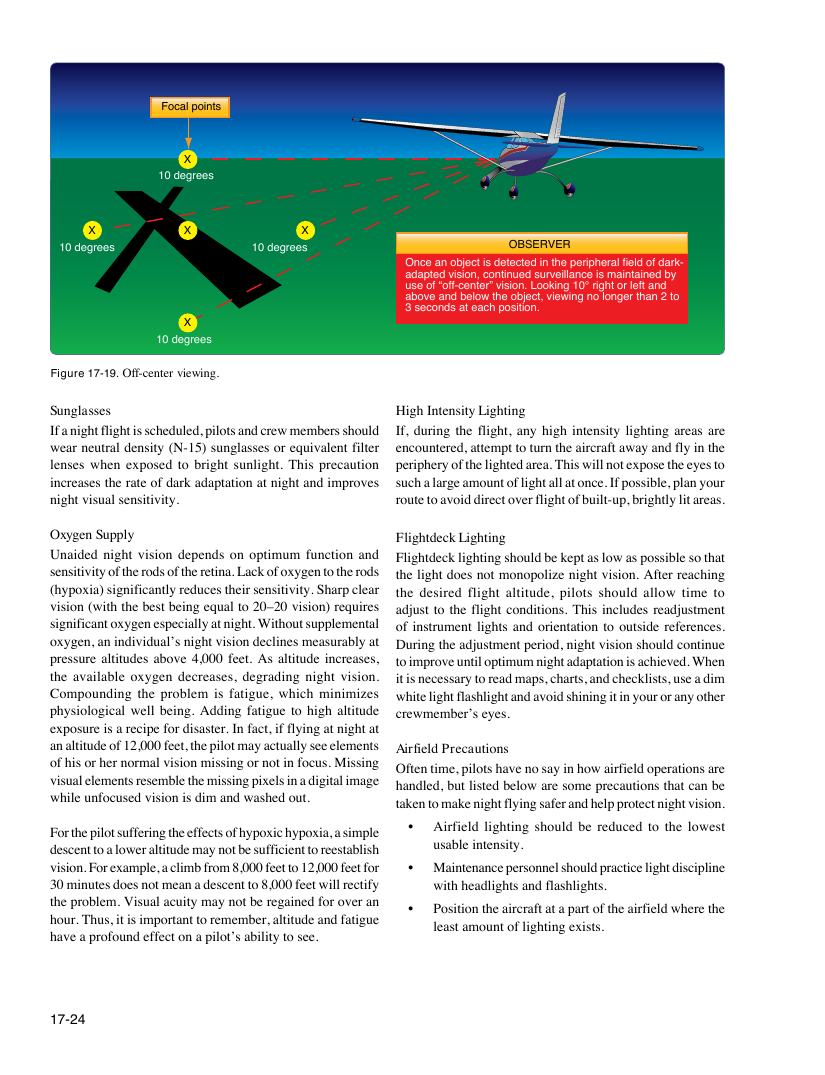
Focal points
X
10 degrees
X X X
10 degrees 10 degrees OBSERVER
Once an object is detected in the peripheral field of dark-
adapted vision, continued surveillance is maintained by
use of “off-center” vision. Looking 10° right or left and
above and below the object, viewing no longer than 2 to
3 seconds at each position.
X
10 degrees
Figure 17-19. Off-center viewing.
Sunglasses High Intensity Lighting
If a night flight is scheduled, pilots and crew members should If, during the flight, any high intensity lighting areas are
wear neutral density (N-15) sunglasses or equivalent filter encountered, attempt to turn the aircraft away and fly in the
lenses when exposed to bright sunlight. This precaution periphery of the lighted area. This will not expose the eyes to
increases the rate of dark adaptation at night and improves such a large amount of light all at once. If possible, plan your
night visual sensitivity. route to avoid direct over flight of built-up, brightly lit areas.
Oxygen Supply Flightdeck Lighting
Unaided night vision depends on optimum function and Flightdeck lighting should be kept as low as possible so that
sensitivity of the rods of the retina. Lack of oxygen to the rods the light does not monopolize night vision. After reaching
(hypoxia) significantly reduces their sensitivity. Sharp clear the desired flight altitude, pilots should allow time to
vision (with the best being equal to 20–20 vision) requires adjust to the flight conditions. This includes readjustment
significant oxygen especially at night. Without supplemental of instrument lights and orientation to outside references.
oxygen, an individual’s night vision declines measurably at During the adjustment period, night vision should continue
pressure altitudes above 4,000 feet. As altitude increases, to improve until optimum night adaptation is achieved. When
the available oxygen decreases, degrading night vision. it is necessary to read maps, charts, and checklists, use a dim
Compounding the problem is fatigue, which minimizes white light flashlight and avoid shining it in your or any other
physiological well being. Adding fatigue to high altitude crewmember’s eyes.
exposure is a recipe for disaster. In fact, if flying at night at
an altitude of 12,000 feet, the pilot may actually see elements Airfield Precautions
of his or her normal vision missing or not in focus. Missing
Often time, pilots have no say in how airfield operations are
visual elements resemble the missing pixels in a digital image
handled, but listed below are some precautions that can be
while unfocused vision is dim and washed out.
taken to make night flying safer and help protect night vision.
• Airfield lighting should be reduced to the lowest
For the pilot suffering the effects of hypoxic hypoxia, a simple
usable intensity.
descent to a lower altitude may not be sufficient to reestablish
vision. For example, a climb from 8,000 feet to 12,000 feet for • Maintenance personnel should practice light discipline
30 minutes does not mean a descent to 8,000 feet will rectify with headlights and flashlights.
the problem. Visual acuity may not be regained for over an
• Position the aircraft at a part of the airfield where the
hour. Thus, it is important to remember, altitude and fatigue
least amount of lighting exists.
have a profound effect on a pilot’s ability to see.
17-24