FAA-H-8083-25C · Source PDF page 427
Aeromedical Factors
Histotoxic Hypoxia · PHAK page 17-5
Searchable transcription
not hypoxia related. Common symptoms of hyperventilation
include: Middle ear Eustachian tube
• Visual impairment
• Unconsciousness Eardrum
• Lightheaded or dizzy sensation
• Tingling sensations
• Hot and cold sensations
• Muscle spasms
Auditory canal
The treatment for hyperventilation involves restoring
the proper carbon dioxide level in the body. Breathing
Outer ear Opening to throat
normally is both the best prevention and the best cure
for hyperventilation. In addition to slowing the breathing
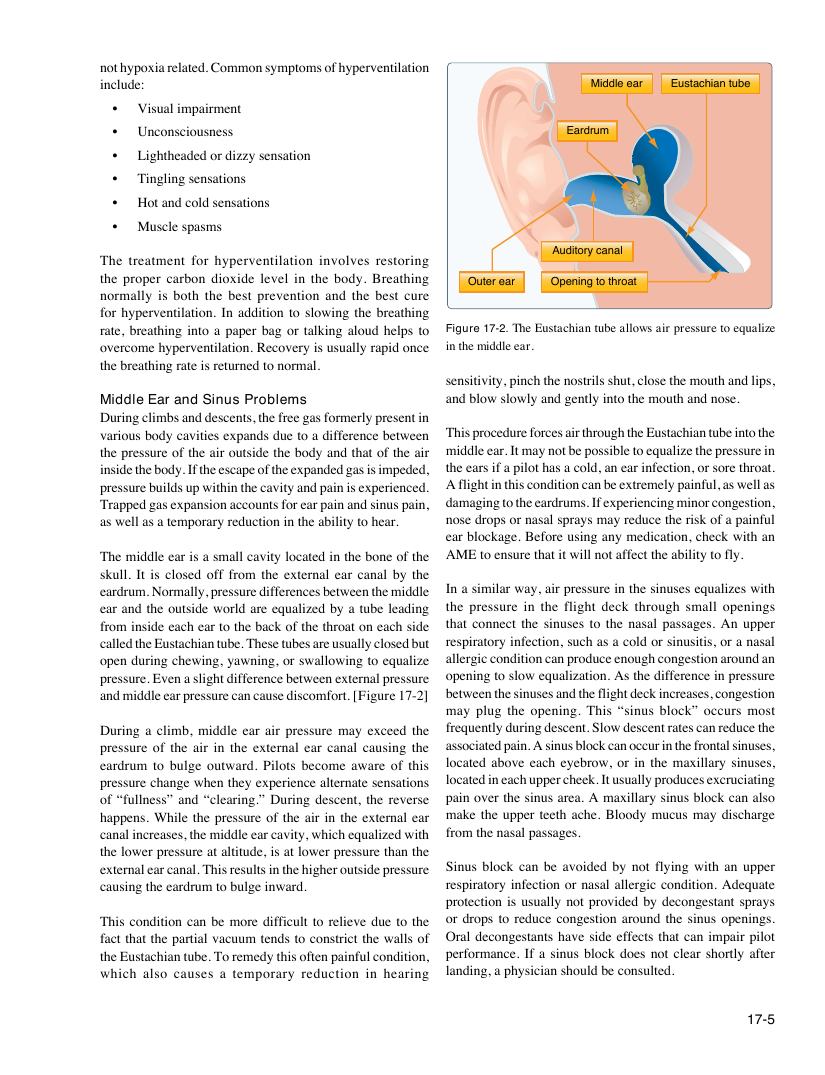
rate, breathing into a paper bag or talking aloud helps to Figure 17-2. The Eustachian tube allows air pressure to equalize
overcome hyperventilation. Recovery is usually rapid once in the middle ear.
the breathing rate is returned to normal.
sensitivity, pinch the nostrils shut, close the mouth and lips,
Middle Ear and Sinus Problems and blow slowly and gently into the mouth and nose.
During climbs and descents, the free gas formerly present in
various body cavities expands due to a difference between This procedure forces air through the Eustachian tube into the
the pressure of the air outside the body and that of the air middle ear. It may not be possible to equalize the pressure in
inside the body. If the escape of the expanded gas is impeded, the ears if a pilot has a cold, an ear infection, or sore throat.
pressure builds up within the cavity and pain is experienced. A flight in this condition can be extremely painful, as well as
Trapped gas expansion accounts for ear pain and sinus pain, damaging to the eardrums. If experiencing minor congestion,
as well as a temporary reduction in the ability to hear. nose drops or nasal sprays may reduce the risk of a painful
ear blockage. Before using any medication, check with an
The middle ear is a small cavity located in the bone of the AME to ensure that it will not affect the ability to fly.
skull. It is closed off from the external ear canal by the
eardrum. Normally, pressure differences between the middle In a similar way, air pressure in the sinuses equalizes with
ear and the outside world are equalized by a tube leading the pressure in the flight deck through small openings
from inside each ear to the back of the throat on each side that connect the sinuses to the nasal passages. An upper
called the Eustachian tube. These tubes are usually closed but respiratory infection, such as a cold or sinusitis, or a nasal
open during chewing, yawning, or swallowing to equalize allergic condition can produce enough congestion around an
pressure. Even a slight difference between external pressure opening to slow equalization. As the difference in pressure
and middle ear pressure can cause discomfort. [Figure 17-2] between the sinuses and the flight deck increases, congestion
may plug the opening. This “sinus block” occurs most
During a climb, middle ear air pressure may exceed the frequently during descent. Slow descent rates can reduce the
pressure of the air in the external ear canal causing the associated pain. A sinus block can occur in the frontal sinuses,
eardrum to bulge outward. Pilots become aware of this located above each eyebrow, or in the maxillary sinuses,
pressure change when they experience alternate sensations located in each upper cheek. It usually produces excruciating
of “fullness” and “clearing.” During descent, the reverse pain over the sinus area. A maxillary sinus block can also
happens. While the pressure of the air in the external ear make the upper teeth ache. Bloody mucus may discharge
canal increases, the middle ear cavity, which equalized with from the nasal passages.
the lower pressure at altitude, is at lower pressure than the
external ear canal. This results in the higher outside pressure Sinus block can be avoided by not flying with an upper
causing the eardrum to bulge inward. respiratory infection or nasal allergic condition. Adequate
protection is usually not provided by decongestant sprays
This condition can be more difficult to relieve due to the or drops to reduce congestion around the sinus openings.
fact that the partial vacuum tends to constrict the walls of Oral decongestants have side effects that can impair pilot
the Eustachian tube. To remedy this often painful condition, performance. If a sinus block does not clear shortly after
which also causes a temporary reduction in hearing landing, a physician should be consulted.
17-5