FAA-H-8083-25C · Source PDF page 428
Aeromedical Factors
Histotoxic Hypoxia · PHAK page 17-6
Searchable transcription
YAW
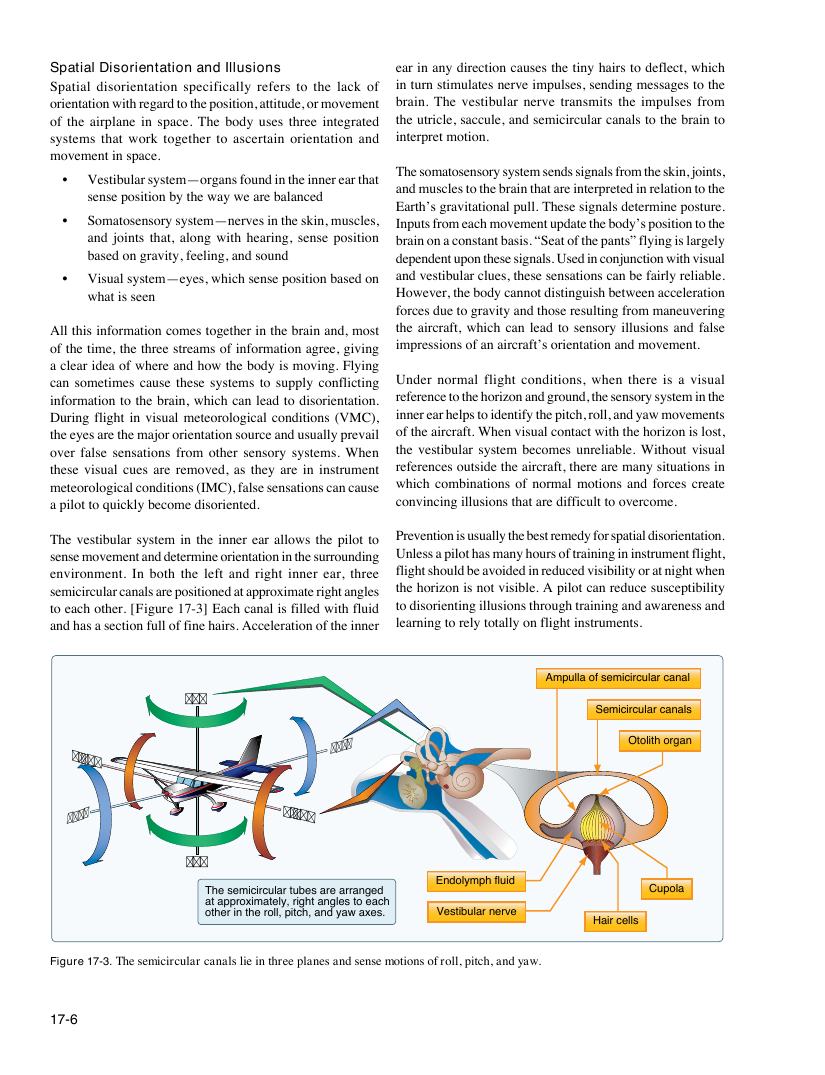
Figure 17-3. The semicircular canals lie in three planes and sense motions of roll, pitch, and yaw.
17-6
R O L L PITCH
YAW
P IT C H
R O L L
Spatial Disorientation and Illusions ear in any direction causes the tiny hairs to deflect, which
Spatial disorientation specifically refers to the lack of in turn stimulates nerve impulses, sending messages to the
orientation with regard to the position, attitude, or movement brain. The vestibular nerve transmits the impulses from
of the airplane in space. The body uses three integrated the utricle, saccule, and semicircular canals to the brain to
systems that work together to ascertain orientation and interpret motion.
movement in space.
The somatosensory system sends signals from the skin, joints,
• Vestibular system—organs found in the inner ear that
and muscles to the brain that are interpreted in relation to the
sense position by the way we are balanced
Earth’s gravitational pull. These signals determine posture.
• Somatosensory system—nerves in the skin, muscles, Inputs from each movement update the body’s position to the
and joints that, along with hearing, sense position brain on a constant basis. “Seat of the pants” flying is largely
based on gravity, feeling, and sound dependent upon these signals. Used in conjunction with visual
• Visual system—eyes, which sense position based on and vestibular clues, these sensations can be fairly reliable.
what is seen However, the body cannot distinguish between acceleration
forces due to gravity and those resulting from maneuvering
All this information comes together in the brain and, most the aircraft, which can lead to sensory illusions and false
of the time, the three streams of information agree, giving impressions of an aircraft’s orientation and movement.
a clear idea of where and how the body is moving. Flying
can sometimes cause these systems to supply conflicting Under normal flight conditions, when there is a visual
information to the brain, which can lead to disorientation. reference to the horizon and ground, the sensory system in the
During flight in visual meteorological conditions (VMC), inner ear helps to identify the pitch, roll, and yaw movements
the eyes are the major orientation source and usually prevail of the aircraft. When visual contact with the horizon is lost,
over false sensations from other sensory systems. When the vestibular system becomes unreliable. Without visual
these visual cues are removed, as they are in instrument references outside the aircraft, there are many situations in
meteorological conditions (IMC), false sensations can cause which combinations of normal motions and forces create
a pilot to quickly become disoriented. convincing illusions that are difficult to overcome.
The vestibular system in the inner ear allows the pilot to Prevention is usually the best remedy for spatial disorientation.
sense movement and determine orientation in the surrounding Unless a pilot has many hours of training in instrument flight,
environment. In both the left and right inner ear, three flight should be avoided in reduced visibility or at night when
semicircular canals are positioned at approximate right angles the horizon is not visible. A pilot can reduce susceptibility
to each other. [Figure 17-3] Each canal is filled with fluid to disorienting illusions through training and awareness and
and has a section full of fine hairs. Acceleration of the inner learning to rely totally on flight instruments.
Ampulla of semicircular canal
Semicircular canals
Otolith organ
Endolymph fluid
The semicircular tubes are arranged Cupola
at approximately, right angles to each
other in the roll, pitch, and yaw axes. Vestibular nerve
Hair cells